
How to Repel Birds Effectively: Practical Methods for Homes, Roofs, Gardens, and Outdoor Spaces
Urban and suburban bird activity can be charming — until it becomes a nuisance. Birds nesting on rooftops, perching on balconies, or scavenging in gardens create health risks, property damage, and cleanup burdens. Effective bird deterrence is not one-size-fits-all; it involves understanding bird behavior and applying a combination of humane, science-driven methods tailored to your property and situation.
This guide synthesizes expert practice and proven techniques for repelling birds from houses, roofs, gardens, balconies, porches, and trees — from natural solutions to mechanical deterrents like bird spikes and diverters.
Why Birds Gather and Why They Become a Problem
Birds are attracted to environments that provide food, shelter, and safe perching or nesting opportunities. Flat ledges, eaves, rooftops, balcony railings and tree branches become logical stopovers when food sources or nesting materials are nearby. Once established, bird presence can lead to droppings that damage surfaces, attract insects, and create sanitation issues.
What Works: Core Types of Bird Deterrent Methods
Effective bird deterrence combines multiple strategies. Experts categorize solutions into these main groups:
Physical Barriers
Physical barriers prevent birds from alighting on or accessing a surface.
- Bird spikes and anti-perch strips: Spikes make flat or ledge surfaces unsuitable for landing without harming birds. They are widely used on rooftops, parapets, window sills and ledges.
- Netting and screening: Fine mesh barriers block access to balconies or garden trellises, making perching and nesting difficult.
- Wire systems and tension lines: Installed along ledges and beams, these create unstable perches that birds avoid.
Among these, bird spikes are one of the most recognized physical deterrents; they create a hostile landing surface that encourages birds to relocate rather than rest or nest.
Visual Deterrents
Birds are sensitive to movement and reflected light.
- Reflective items: Strips, disks, or foil that catch sunlight create visual disturbances that many birds avoid.
- Decoys and predator shapes: Owl or snake figures placed near problem areas can discourage birds — but effectiveness usually declines if the objects remain static.
- Wind-activated reflective devices: Moving reflective arms or surface elements can be especially effective where wind is common.
Visual deterrents work best as part of a multi-layered strategy rather than standalone solutions.
Sound-Based and Sensory Repellents
Birds can respond to sound or perceived threat cues.
- Ultrasonic and electronic repellents: Devices emit high-frequency signals intended to discourage birds. Results vary by species and environment.
- Human scent or scent repellents: Certain smells like vinegar, chili powder or peppermint may make areas less appealing, though results are inconsistent across species.
While often labeled as “natural” solutions, sensory repellents should be tested in combination with other deterrents to achieve lasting results.
Environmental Modification
Reducing the attractiveness of your property can make bird presence less likely.
- Remove food sources: Keep garbage secured and avoid leaving birdseed or scraps where birds can feed.
- Eliminate nesting materials: Clearing debris and potential nesting spots discourages long-term establishment.
- Trim vegetation: Dense trees and shrubs near building edges can attract roosting birds; managing plant structure can reduce perching opportunities.
These preventive steps often amplify the effectiveness of physical and sensory deterrents.
How to Keep Birds Away in Specific Areas
Different locations present unique challenges. Below are targeted strategies for common problem zones:
Houses and Building Exteriors
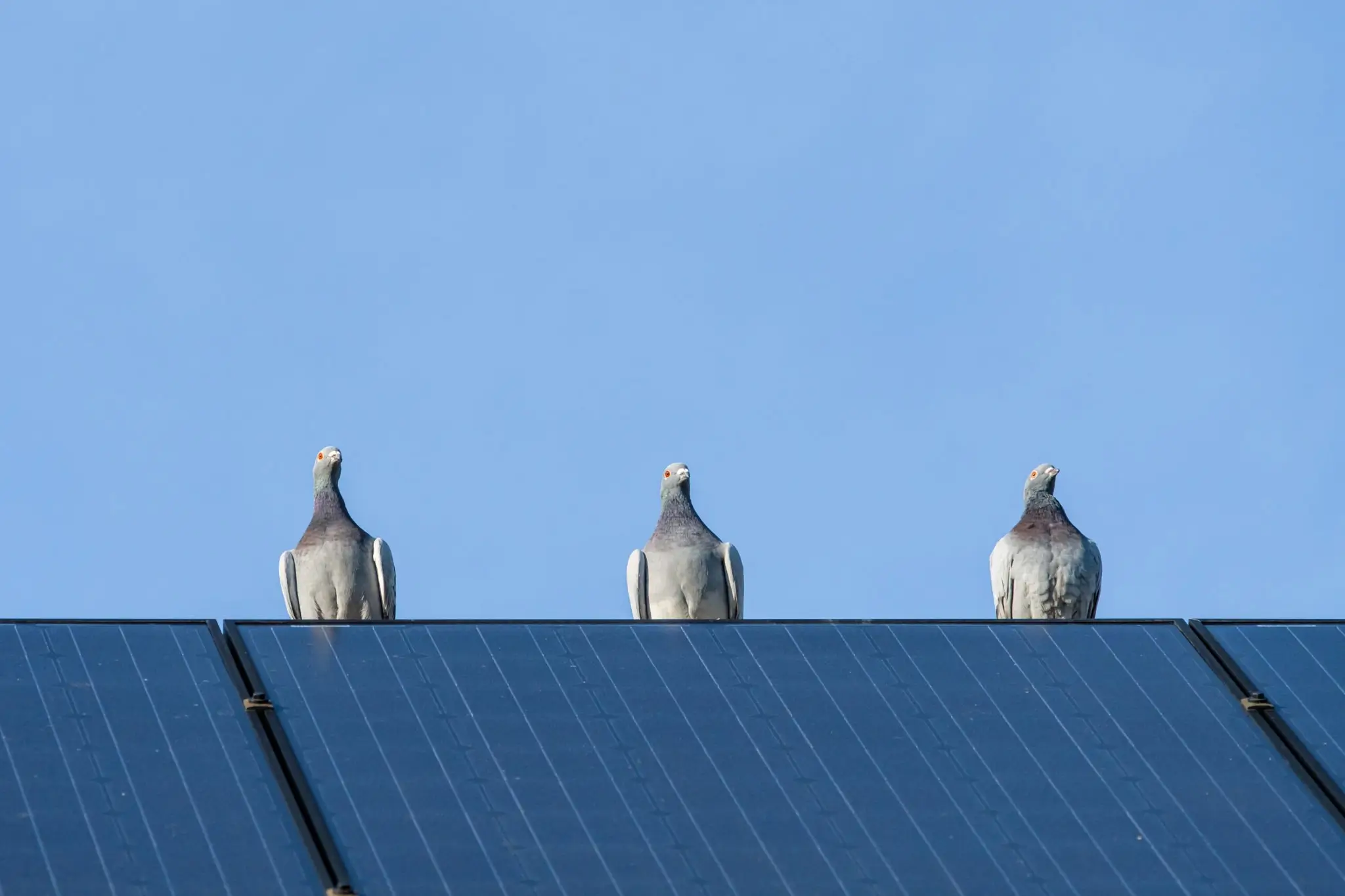
Birds often perch on house exteriors because of accessible ledges and rooflines. Installing bird spikes along roof edges and window sills creates physical barriers that discourage roosting. Reflective devices near gutters or ledges add visual interruption.
Roofs and Eaves
Roof surfaces and eaves are attractive because they provide shelter and height. A combination of spikes along roof ridges, tension wires under eaves, and reflective elements near gutters deters birds from settling.
Gardens and Yards
Garden areas attract birds seeking seeds or plants, but netting over vulnerable areas and reflective deterrents can protect crops or flowerbeds. Spikes may also be placed on low walls or garden fences where birds tend to perch.
Balconies and Porches
Balcony railings and porch ledges are common perching spots. Installing transparent netting or spikes along edges makes these surfaces unwelcoming. Reflective ribbons or lightweight hanging objects add an extra layer of deterrence.
Trees and Nesting Locations
Deterring birds from trees requires a different approach: pruning dense limbs near structures, minimizing food sources below, and using visual deterrents within tree canopies can reduce roosting intent.
What Is the Most Effective Bird Deterrent?
There is no single universal solution that works in all environments. Effectiveness depends on bird species, environmental conditions, and the specific site configuration. However, evidence suggests that a combination of physical barriers, visual deterrents, and environmental modification produces the most reliable results.
Mechanical devices such as bird spikes consistently deter birds from landing without harming them by creating an uncomfortable surface. These deterrents work on rooftops, ledges, balconies, and other flat surfaces, encouraging birds to seek alternative perches elsewhere.
Advanced solutions such as wind-activated reflective devices or automated laser repellents are being adopted in rural and large commercial applications to enhance coverage, but physical barriers remain foundational for most residential and urban use cases.
Common Mistakes and Misconceptions
Not all deterrents are equally effective or suitable for every situation:
- Wind chimes and similar noise-only methods are not scientifically proven to deter birds consistently and are not reliable standalone solutions.
- Static predator decoys lose effectiveness over time if not repositioned.
- Birds can adapt quickly to deterrents that do not evolve with periodic repositioning or environmental change.
FAQ
Q: Are bird spikes humane?
A: Yes — properly installed bird spikes deter perching without injuring birds by making surfaces uncomfortable, not dangerous.
Q: Can reflective tape alone keep birds away?
A: Reflective surfaces can help, especially when combined with movement and other deterrents, but are typically not sufficient alone for permanent deterrence.
Q: How often should deterrents be adjusted?
A: Periodic adjustment or rotation of visual and sensory devices helps prevent birds from becoming accustomed to static elements.
Q: Do ultrasonic repellents work?
A: Effectiveness varies by species and environment; they are best used in combination with physical barriers and environmental management.
Conclusion
Effective bird management requires a multi-layered approach that combines physical barriers, visual deterrents, and environmental strategies. Whether protecting a roofline, balcony, garden, or residential façade, understanding bird behavior and deploying a tailored combination of methods can significantly reduce unwanted bird activity. Mechanical deterrents like bird spikes remain a cornerstone of humane, long-term bird control, and integrating them with complementary techniques enhances overall performance and satisfaction.
