
Recommended News
Hot News
Fill in your information
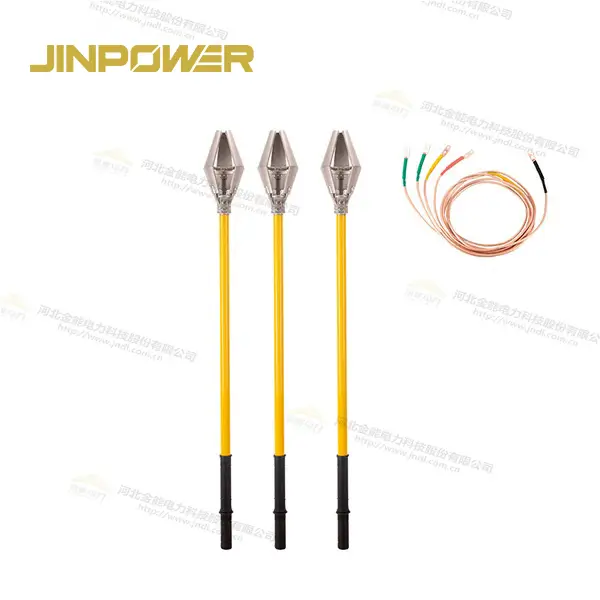
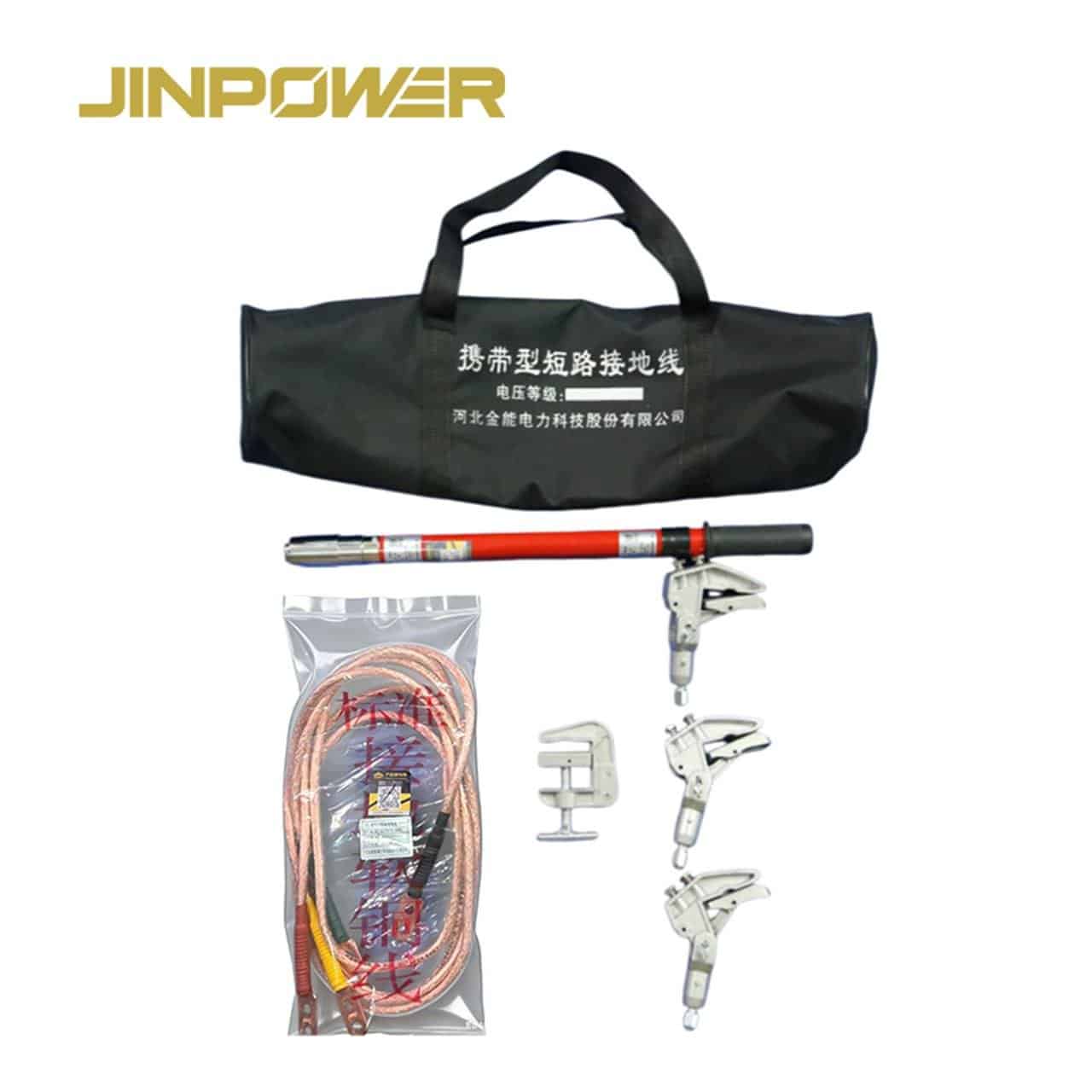
Central Cabinet High-Voltage Grounding Cable (10–95 mm² | 0.5–1.5 m Rod)
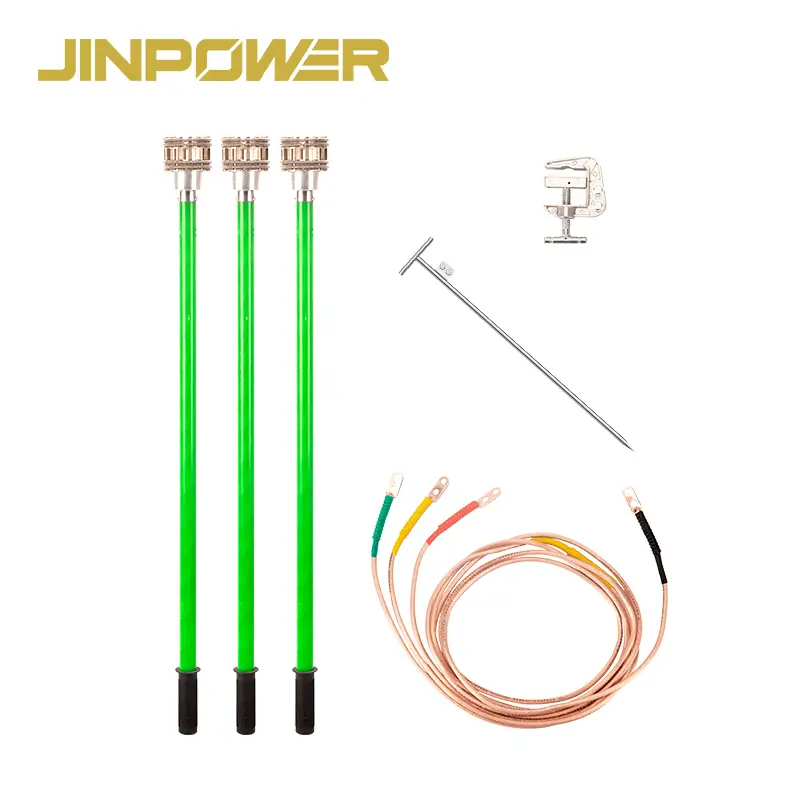
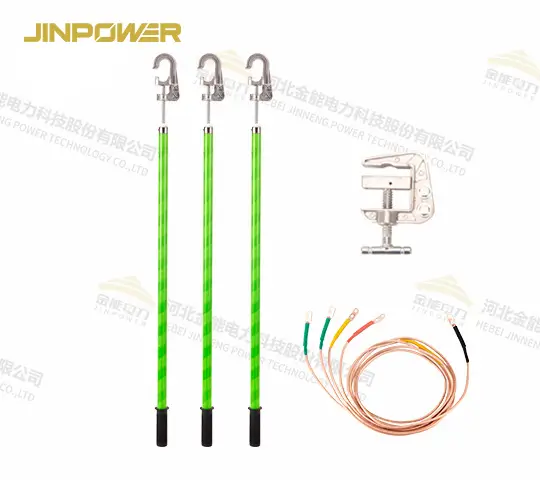
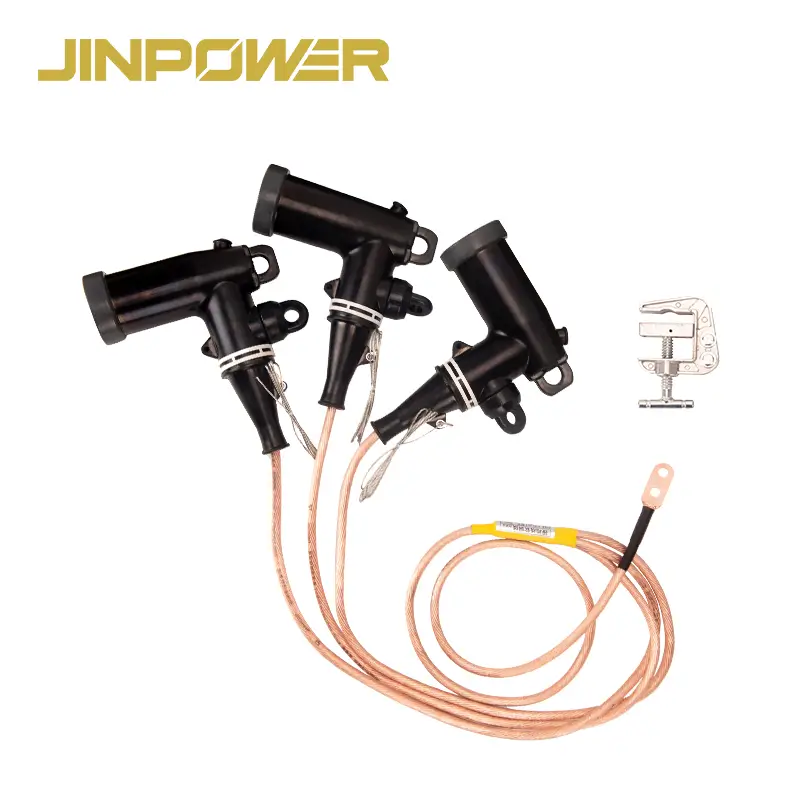
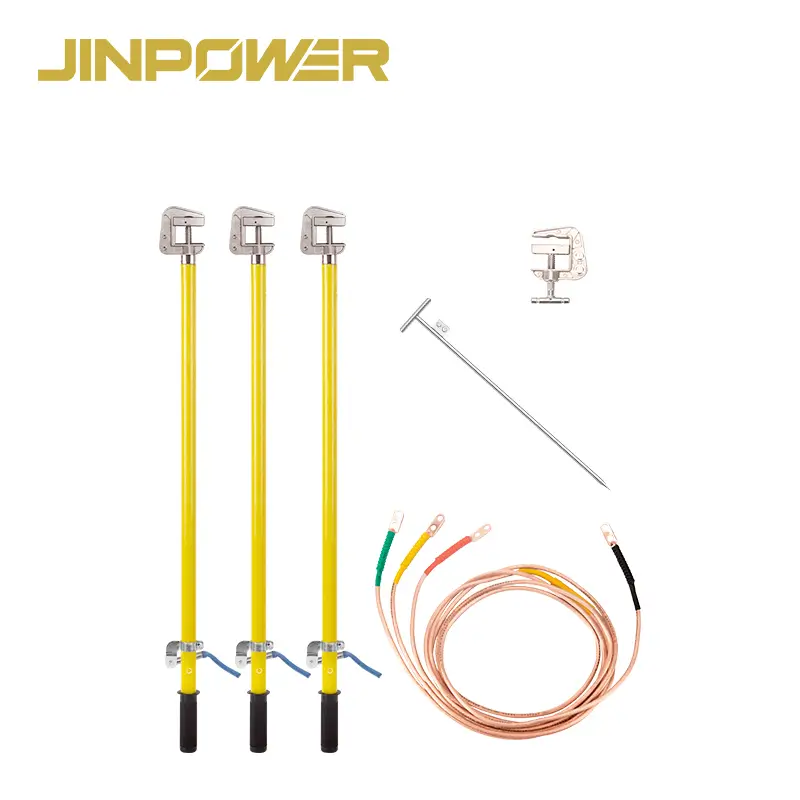
Built for metal-clad switchgear and MV/HV bays, the JINPOWER Central Cabinet High-Voltage Grounding Cable (JN-JDX) delivers a low-resistance, flexible, and durable temporary earthing path for maintenance and testing. The conductor is braided oxygen-free copper (OFHC, ≥99.9%), increasing contact area for lower line resistance and better fatigue life in tight cabinets. Terminations use copper-alloy lugs with spring heat-shrink strain relief to resist kinking at the crimp—available with transparent boots for quick visual QC.
The virgin-PVC sheath (no recycled plastics) provides robust insulation, high flexibility, and long service life. Handling safety is enhanced by a reinforced epoxy-resin insulating rod in 0.5 m / 1.0 m / 1.5 m lengths—rigid, non-conductive, and impact-resistant for close-quarters work. Cross-sections span 10–95 mm², covering common cabinet grounding points; custom lengths, labeling, and color coding are available for fleet standardization.
For compliance and handover, JINPOWER supports selection to project rules and can align with IEC 61230 practices for portable earthing assemblies. Each Central Cabinet High-Voltage Grounding Cable ships with a Certificate of Conformity and a concise test summary; third-party reports are available on request. The result is a ready-to-deploy grounding lead that crews trust for fast clamp-up, predictable resistance, and clean documentation across substations and indoor cells.
Design Highlights — Low Resistance, High Flex, Visible Quality
OFHC braided conductor (≥99.9% purity).
Braiding increases contact area, so the Central Cabinet High-Voltage Grounding Cable runs cooler at the same current. High-purity copper lowers line resistance and improves fatigue life when routed through tight cabinet bends.
Copper-alloy lugs with spring heat-shrink.
Terminations use wear-resistant lugs and a spring-reinforced heat-shrink sleeve at the crimp. The sleeve spreads bending stress, reducing kinks and micro-cracks over repeated use. Transparent boots are available for instant visual QC.
Virgin-PVC sheath, not recycled.
Clean insulation, high flexibility, longer service life. The smooth jacket resists oil mist and dust, and wipes down easily to keep contact resistance predictable during maintenance.
Reinforced epoxy-resin grounding rod (0.5 m / 1.0 m / 1.5 m).
Rigid, non-conductive, and impact-resistant for close-quarters work inside metal-clad switchgear. Adds control when clamping onto cabinet grounding points.
Built for repeat service.
Low resistance by design, high strand flexibility to prevent metal fatigue, kink-resistant terminations, and jackets that survive cabinet environments. Result: stable earthing performance with fewer reworks and cleaner inspection records.
What this means for operations.
Faster clamp-up, easier routing, and documented quality at the points auditors check first—conductor purity, termination integrity, and insulation condition. The JN-JDX grounding lead keeps downtime short and paperwork simple for switchgear maintenance and testing.


Specs & Options — Sizes, Lengths, Terminations
What’s standard
- Conductor area: 10 / 16 / 25 / 35 / 50 / 70 / 95 mm² (OFHC braided copper, ≥99.9% purity)
- Grounding rod lengths: 0.5 m · 1.0 m · 1.5 m (reinforced epoxy-resin, insulated, impact-resistant)
- Sheath: virgin PVC (no recycled plastics), smooth jacket, easy to wipe clean
- Terminations: copper-alloy lugs with spring heat-shrink strain relief; transparent boots optional
Representative matrix
| Conductor Area (mm²) | Conductor Type | Rod Length Options | Sheath | Termination Options* |
|---|---|---|---|---|
| 10–95 | OFHC braided copper (≥99.9%) | 0.5 / 1.0 / 1.5 m | Virgin PVC | Copper-alloy lugs + heat-shrink (clear boot optional) |
* Lug hole sizes and styles are matched to your cabinet studs/ground bars at order (e.g., ring/flat, sized per spec). Adapter hardware can be supplied if cabinets differ across sites.
Options you can add
- Color coding & labeling for fleet ID and maintenance tagging
- Custom assembly lengths and multi-lead sets for specific switchgear bays
- Documentation pack aligned to your template (CoC, test summary; third-party reports on request)
Note
Resistance figures and lug sizing are finalized on the spec sheet for your cabinet model. Selection should follow your project rules and applicable portable earthing practices (e.g., IEC 61230) under local procedures.
Applications — Where It Fits, What It Solves
Built for metal-clad switchgear. Use the JINPOWER Central Cabinet High-Voltage Grounding Cable (JN-JDX) for temporary earthing during maintenance, testing, and fault restoration inside MV/HV cabinets.
Typical tasks
- De-energized work prep: bond the cabinet ground bar, bus, or frame before contact.
- Instrumented tests: provide a low-resistance return path for routine checks.
- Discharge & hold-down: safely discharge stored energy and keep circuits at earth potential.
- Tight routing: braided OFHC copper bends cleanly around doors, shutters, and barriers.
Why crews like it
- Flexible path, low line resistance, kink-resistant terminations.
- Epoxy-resin rod (0.5/1.0/1.5 m) gives control in close quarters.
- Transparent boots (option) make crimp quality visible at a glance.
Boundary note: Selection and use must follow your procedure and applicable portable earthing practice (e.g., IEC 61230). Choose cross-section for the fault level and duration; verify clean contact surfaces; record the connection in the job plan.
Testing & Docs — Simple, Auditable
- References: aligns with portable earthing practice used by utilities (e.g., IEC 61230).
- What we test: continuity/resistance of the assembly, crimp integrity, visual workmanship.
- What you get: Certificate of Conformity, factory test summary; third-party report if required.
- Marking: model, cross-section, rod length, and serial ID for asset systems.
Keep records with the cabinet file; wipe the jacket after use and log the inspection.
Selection Guide — Choose Once, Use Everywhere
Pick the conductor area (10–95 mm²).
Use your project rules: fault current (kA), clearing time (s), cable run length. Higher fault levels → larger cross-section.
Pick the rod length (0.5 / 1.0 / 1.5 m).
Match cabinet depth and access. Short for tight cells, long for reach across barriers.
Pick the terminations.
Lug hole size/style to your studs and ground bars. Add transparent boots if you want visual QC.
Options to standardize.
Color coding by site, serialized labels, custom assembly length, adapter hardware for mixed cabinets.
If any parameter is undecided, JINPOWER will draft a one-page spec with the recommended cross-section and lug set for your cabinet model.
FAQ
Q1: What sizes are available?
10–95 mm² conductor; 0.5 / 1.0 / 1.5 m epoxy-resin rod lengths.
Q2: What copper do you use?
OFHC braided copper (≥99.9% purity) for low resistance and high flexibility.
Q3: How are lugs protected?
Copper-alloy lugs with spring heat-shrink; transparent boots optional.
Q4: Jacket material?
Virgin PVC (no recycled plastics), smooth, easy to wipe clean.
Q5: Documentation?
CoC, factory test summary; third-party reports on request.
Q6: How do I select cross-section?
By fault level, clearing time, and cable length per your standard (portable earthing practice, e.g., IEC 61230).
Q7: Lead time?
Typically 20–30 days with export paperwork.









 Hrvatski
 Čeština
 Dansk
Dansk Nederlands
 Filipino
 Français
 Deutsch
 Italiano
 日本語
日本語 Қазақ тілі
 ភាសាខ្មែរ
 한국어
한국어 Кыргызча
 ພາສາລາວ
 Монгол
 فارسی
فارسی Polski
 Português
 Română
 Русский
 Slovenščina
 Español
 Kiswahili
 ไทย
ไทย Українська
 Tiếng Việt
 English