
Recommended News
Hot News
Fill in your information
Climate Controlled Storage Cabinets for Electrical Safety Tools & PPE
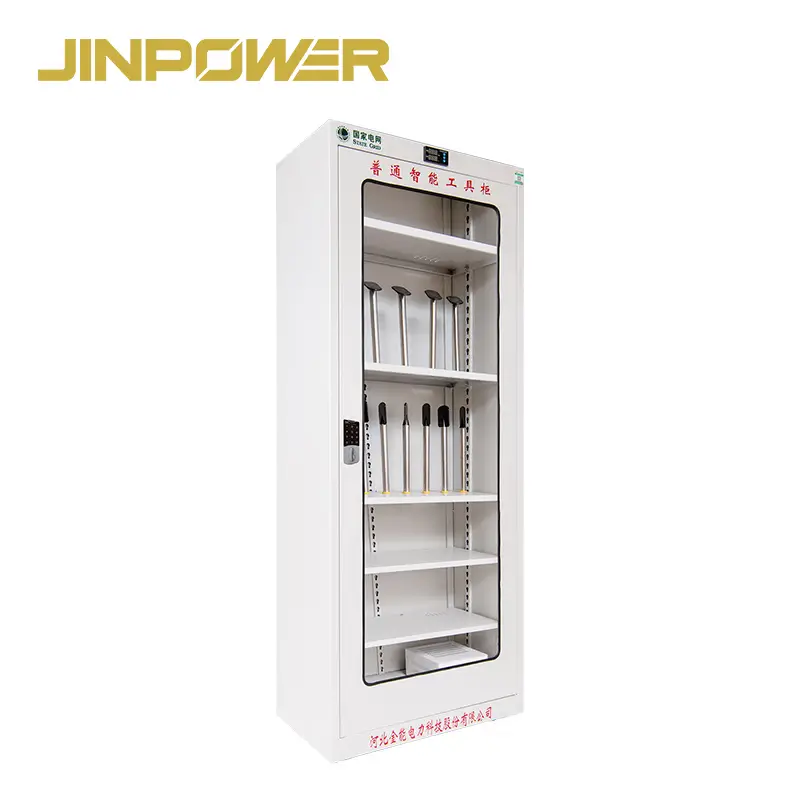
Keep insulated tools, PPE, and test instruments within a safe operating envelope. Our climate controlled storage cabinets deliver stable temperature and humidity, so rubber, polymer, and composite materials age slower, inspections pass more often, and field crews stay ready. Each climate control cabinet combines precise sensing, sealed construction, and configurable interiors to create repeatable storage conditions. This is cabinet climate control built for substations, maintenance centers, and wind O&M sites.



Why climate control matters
Insulated gloves, dielectric tools, and voltage detectors are sensitive to heat, cold, and moisture. A climate controlled cabinet mitigates cracking, stiffness, and moisture-driven failures, reducing unplanned replacements and downtime. For utilities, labs, and high-voltage workshops, climate controlled cabinets are a straightforward way to protect asset life and audit readiness.
Cabinet climate control & monitoring
- Setpoints & tolerance: configurable temperature/humidity bands with stable control logic.
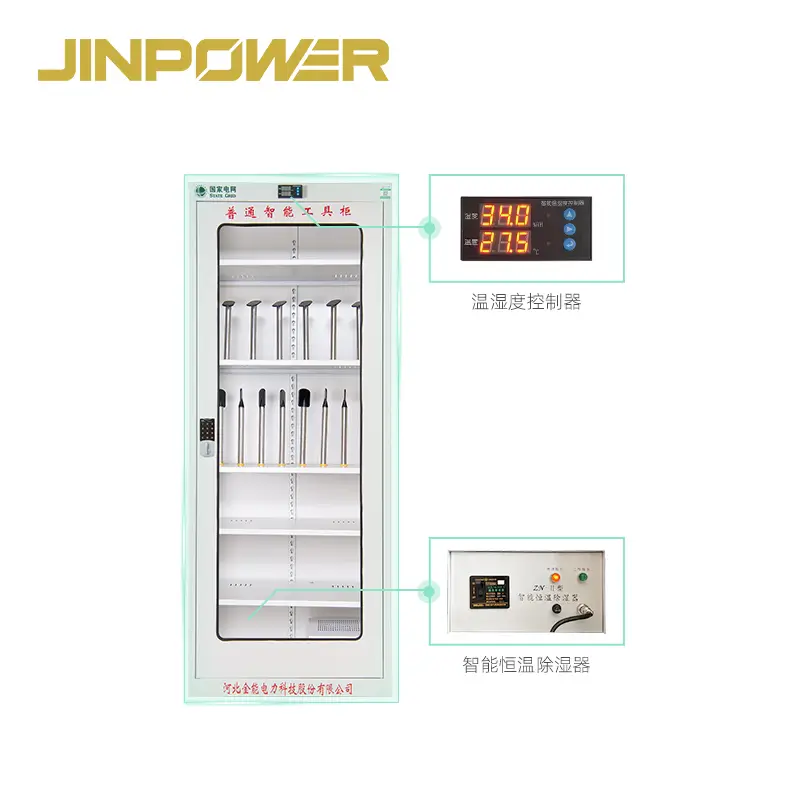
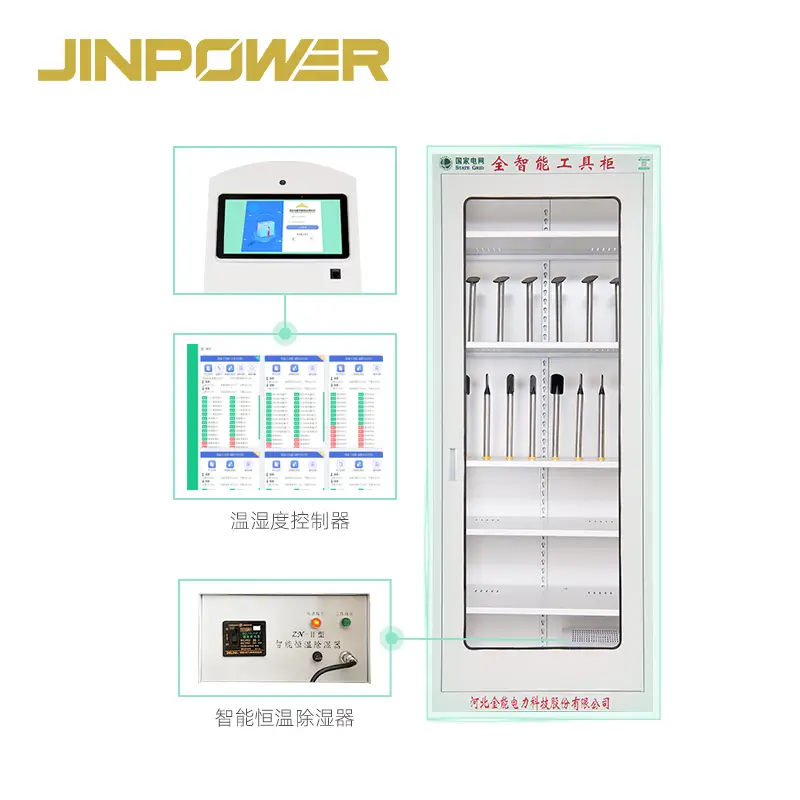
- Digital HMI: clear panel display for live values, alarms, and service prompts.
- Sensing: industrial-grade temperature and humidity sensors with calibration support.
- Sealing & airflow: gasket-sealed doors and designed airflow paths to minimize gradients.
- Alerts (optional): local buzzer/light; interface for facility alerting where required.
- Audit trail: service tags, label language, and serials for site acceptance.
Use cases
- Substations & switchyards: protect live-line PPE and detectors between shifts.
- Utility maintenance centers: centralize storage with accountable access.
- Wind O&M: stabilize storage in nacelle/operations bases across seasons.
- Training & research labs: safeguard calibration instruments and sample materials.
- Harsh climates: desert, alpine, coastal—where temperature and humidity swing widely.
Selection guide
| Application | Capacity class | Climate range (site policy) | Monitoring & alerts | Interior layout | Notes |
|---|---|---|---|---|---|
| Substation equipment room | 600–1200 L | Configure per PPE/tool spec | Panel display + optional alarm | Glove racks, detector trays, tool hooks | Prioritize sealing & access logging |
| Utility maintenance center | 900–1800 L | Configurable | Panel display; add alarm if shared | Mixed shelves + dividers | Segment PPE vs. tools for quick issue/return |
| Wind O&M base | 600–1200 L | Configurable | Display + alarm | Adjustable trays; shock-safe compartments | Plan for transport/space constraints |
| Training/QA lab | 300–900 L | Tighter tolerance | Display + data export (optional) | Small-item drawers; label lanes | Emphasize audit trail |
| Desert/coastal sites | 900–1800 L | Configurable | Alarm recommended | Sealed shelves; corrosion-aware fittings | Higher inspection cadence |
Technical specifications
Construction
Powder-coated steel body, gasket-sealed doors, reinforced hinges; non-conductive shelving/dividers available.
Climate system
Closed-loop cabinet climate control with fan-assisted airflow; configurable temperature/humidity setpoints; condensate management per configuration.
Electronics & HMI
Digital display for setpoints and live values; alarm indicators (optional); maintenance prompts; sensor calibration support.
Interior
Adjustable shelves, glove racks, hooks/dividers for grounding accessories and detectors; labeling lanes for issuance control.
Safety & electrical
Grounded power inlet, over-current protection, and enclosure safeguards appropriate to indoor industrial environments.
Documentation & traceability
Compliance pack with testing reports; conformity tag; serial/ID formats to support acceptance and audits.
Integration with your electrical safety program
A climate controlled storage cabinet pairs naturally with insulated mats, voltage detectors, grounding sticks, and live-line tools. Use it as the storage backbone that protects materials while your procedures govern usage and inspection.
OEM / ODM options
- Dimensions and capacity classes
- Interior layouts (racks, trays, hooks, dividers)
- Door configuration and viewing windows
- Label language, serial formats, documentation bundle
- Finishes and identification graphics for fleet rollouts
Price & RFQ
We quote by configuration—not one-size-fits-all. Cost drivers include capacity, control/monitoring options, interior layout, documentation bundle, quantity, and delivery terms.
- Site type: Substation / Maintenance Center / Wind O&M / Lab / Other
- Target temperature/humidity range & tolerance (per policy)
- Capacity class & interior layout (racks/dividers/hooks)
- Alerts/data needs (none / local alarm / integration)
- Documentation (compliance pack Y/N, label language)
- Quantity, destination, Incoterms, target ship date
FAQ
Q1. What’s the difference between a climate control cabinet and a regular steel cabinet?
A climate control cabinet stabilizes temperature and humidity; regular cabinets do not, so sensitive dielectric materials degrade faster.
Q2. Which items benefit most from climate controlled storage cabinets?
Insulated gloves, dielectric hand tools, voltage detectors, and moisture-sensitive PPE or calibration instruments.
Q3. Can we export data or alarms?
Yes—options include local alarms and, where specified, interfaces for facility systems. Confirm during RFQ.
Q4. How do we choose capacity?
List tool/PPE counts by crew and add growth headroom. Use adjustable interiors to separate PPE from instruments.
Q5. What documents are provided?
Testing reports, conformity tag, and serial/ID records in the compliance pack to support acceptance and audits.
Configure your climate controlled storage cabinet to match your site policy and inventory. Request specs & RFQ for a tailored bill of materials and pricing.





 Hrvatski
 Čeština
 Dansk
Dansk Nederlands
 Filipino
 Français
 Deutsch
 Italiano
 日本語
日本語 Қазақ тілі
 ភាសាខ្មែរ
 한국어
한국어 Кыргызча
 ພາສາລາວ
 Монгол
 فارسی
فارسی Polski
 Português
 Română
 Русский
 Slovenščina
 Español
 Kiswahili
 ไทย
ไทย Українська
 Tiếng Việt
 English