
Recommended News
Hot News
Fill in your information
Barrier Tape (Disposable Warning Tape) – Non-Adhesive PE Warning Tape Rolls for Fast Area Isolation
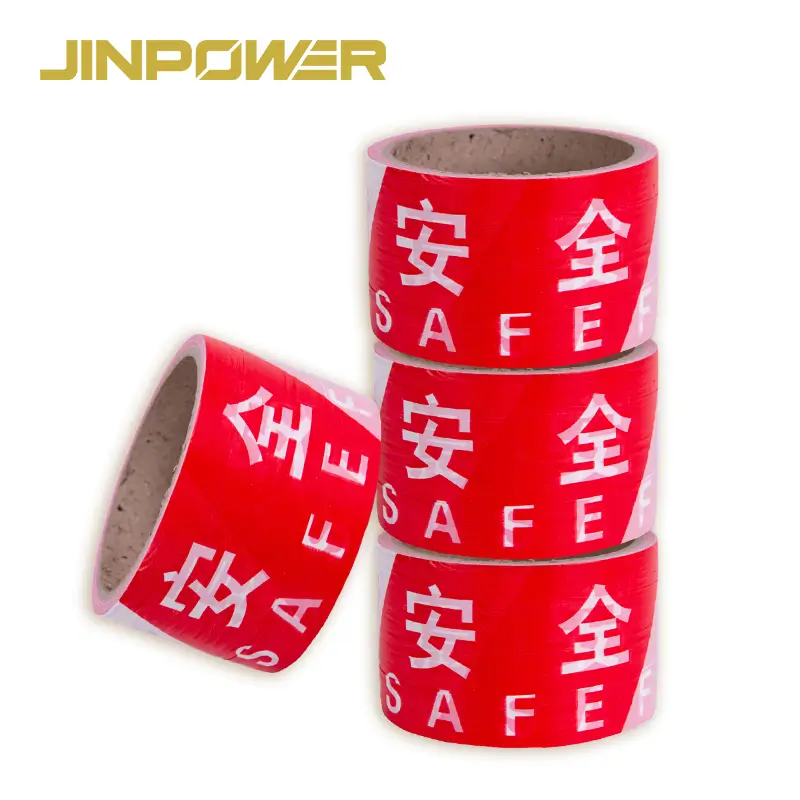
When you need to isolate a risk area quickly, barrier tape is one of the fastest and most cost-effective tools you can deploy. Our Disposable Barrier Tape (Model: JN-JSD-I) is a non-adhesive PE warning tape made for clear visual control at construction sites, electrical maintenance zones, traffic incidents, and restricted access areas.
Most professional barricade / barrier tapes are made from non-adhesive polyethylene film because it is lightweight, flexible, and practical for temporary indoor or outdoor use.
- Product name: Disposable Barrier Tape / Barrier Warning Tape / Barricade Warning Tape
- Model: JN-JSD-I
- Material: PE (polyethylene), non-adhesive film
- Width: 6 cm
- Length (standard): 65 m / roll
- Custom length: available (including long rolls up to 500 m)
- Printing: stock warning templates + custom printed barrier tape (logo, wording, phone, multilingual)
- Options: color library + warning message template library (final content follows your site rules and local requirements)



What Is Barrier Tape (and What It Is Not)
Barrier tapes are used to warn, guide, and restrict entry around a temporary hazard. They create a visible boundary so people know where not to go, and they help supervisors keep a site organized during work, repairs, or incident response.
Barrier tape is usually non-adhesive. It is meant to be stretched and fixed between cones, posts, fences, or barricades—often tied, stapled, or nailed in place depending on the site.
Barrier tape is not the same as adhesive warning tape or floor warning tape. Adhesive tapes are designed to stick to surfaces and survive traffic, cleaning, and abrasion. Barrier tape is mainly for temporary perimeter control and quick isolation. Keeping this distinction clear prevents wrong purchasing and misuse on site.
PE Film Performance: Why Non-Adhesive PE Warning Tape Works So Well
Your tape needs to stay readable and intact while crews pull it tight, re-tension it, and expose it to wind, moisture, and repeated handling. PE film is widely used because it is flexible and can handle stretching better than many brittle materials.
Even tension and fewer break points
“Even tension” means the film thickness and roll winding are stable, so the tape does not feel weak in random sections. In real deployment, this reduces unexpected tearing and saves time because crews do not need to re-install broken segments.
Weather readiness and cold handling
Many non-adhesive barricade tapes are positioned for both indoor and outdoor use and highlight practical field behaviors such as resisting sagging over distance and staying pliable in cold temperatures.
Printing visibility is part of performance
On a busy job site, tape is only effective if people notice it immediately. Competitor specifications commonly emphasize continuous repeating messages and bold printing along the entire roll.
Thickness Grades and How to Choose the Right One
Barrier tape is often specified by thickness in mil (thousandths of an inch). In the market, common thicknesses range from 2 mil to 4 mil, and 3 mil is a popular durability choice for many general applications.
Typical selection logic (simple and practical)
- 2 mil (economy): short-duration work zones, light wind, fast turnover sites
- 3 mil (standard): general construction, utilities, routine maintenance perimeters
- 4 mil (heavy duty): higher pulling abuse, longer spans, rougher handling (often specified with higher tensile/elongation values)
If you are comparing warning tape specification across suppliers, thickness should be evaluated together with print clarity and winding quality. A thicker tape still fails in practice if printing is unclear or the roll is poorly wound.
Visibility System: Colors, Stripes, and Warning Patterns
Barrier tape works because it creates fast recognition. High contrast stripes and clear words reduce hesitation and help people comply even when they are distracted.
Color logic (aligned with common safety practice)
Many sites use yellow-based warnings for general caution. OSHA’s safety color code states that yellow is the basic color for designating caution and marking physical hazards such as tripping or falling risks.
Pattern matters
A striped warning tape (for example yellow/black zebra) is often selected when you want an immediate “hazard” visual signal. Printed text then reinforces the meaning and prevents confusion.
Color Library (Fast Selection for Procurement)
We maintain a color library so you can match tape color to your site rules, local expectations, and project type. Popular options include:
- Yellow and black barrier tape / yellow black barrier tape: general hazard, caution, work zone
- Red and white barrier tape / red-white barrier tape: danger, restricted entry
- Blue and white barrier tape: security line, temporary closure, information boundary
- Green barrier tape: controlled area, directional zoning
- Orange barrier tape: construction and temporary routing
- Pink barrier tape: special temporary marking and event control
- White barrier tape / clear barrier tape: indoor management where softer visibility is required
If you want a specific warning tape pattern or site-specific color standard, we align production to your requirement.
Warning Message Template Library (Stock Legends + Custom Wording)
To speed procurement and reduce back-and-forth, we provide a warning message template library plus made-to-order text.
Stock legends (ready to choose)
Common templates include:
- Caution, Danger, Warning
- No Entry, Do Not Enter, Keep Out
- No Parking
- Authorized Personnel Only
- Work Zone / Construction Area
Custom wording (built to your site rules)
For projects that require clearer control, you can specify:
- Your company name, phone number, project code
- Multi-language warnings for multinational workforces
- Any specific instruction required by your safety manager
Custom Printed Barrier Tape: Personalised, Printed, and Site-Branded
Custom warning tape is not only about branding. It is about stronger compliance and better site control.
What you can personalise
- Company logo and name
- Phone number for site contact
- Project-specific wording (including multilingual)
- Special patterns (striped + text, repeating blocks)
How the printing stays effective
Many professional tapes use a repeating message along the roll so the warning stays visible even after cutting and repositioning.
Proof-based workflow (reduces risk)
A reliable workflow includes artwork confirmation before production. This reduces mistakes and ensures the final printed tape matches your intent.
Electrical Warning Tape: Utility and High-Voltage Work Zones
For electrical maintenance, the objective is simple: keep unauthorized people out and keep the work zone clearly defined.
This is where electrical warning tape, utility warning tape, and high voltage warning tape are commonly used as a visual perimeter line:
- Switching and maintenance zones
- Temporary restricted access during repairs
- Substation or corridor work boundaries
- Incident response boundaries
Important note for accuracy: this page focuses on above-ground non-adhesive barrier tape used for visual control. If you are sourcing underground detectable marker tape, that is a different product specification and should be quoted separately.
Scenario Library: Choose the Right Tape for the Job
Construction barrier tape
Use construction barrier tape to isolate excavation, scaffolding areas, equipment movement paths, and temporary closures. High-contrast colors help keep visitors and contractors aligned.
Police warning tape / crime scene barrier tape
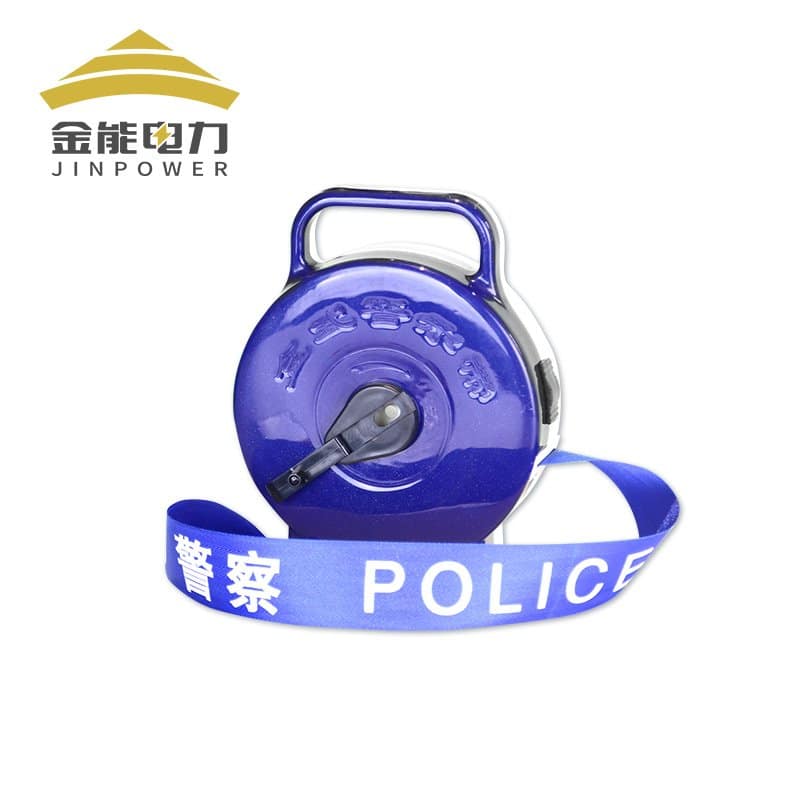
For incident control, police barrier tape and crime scene barrier tape templates help create a clear perimeter with unmistakable messaging.
Asbestos barrier tape / radiation warning tape / biohazard warning tape
For high-risk zones, message accuracy matters more than color preference. We support template-based legends and custom wording based on your EHS requirements.
No entry barrier tape / no parking barrier tape
These are high-compliance use cases. A direct message reduces debate on site and improves enforcement.
Barrier Tape Roll Length and Packaging
- Standard: 65 m / roll (JN-JSD-I)
- Custom: length can be customized, including long-roll formats up to 500 m for large perimeters and repeated site use
- Roll format: compact, easy to carry for inspectors, maintenance crews, and incident responders
If your site needs faster distribution, packaging can be aligned to competitor-style roll handling and storage formats (for example, site-friendly roll packing and quick-issue solutions).
How to Deploy Barrier Tape (Procurement-Level Best Practices)
Barrier tape becomes more effective when it is deployed consistently:
- Fix the tape to cones, posts, fences, or barricades and keep the line taut
- Use repeating message tape when you have multiple entry angles or high traffic
- Combine tape with physical tools (cones, warning posts, temporary fencing) when the risk level requires stronger control
This improves compliance and reduces the chance that people “step through” the perimeter.
Quality and Supplier Reliability: What You Should Check Before You Buy
If you are sourcing from warning tape manufacturers or barrier tape suppliers, you should verify practical quality points that affect real deployment:
- Film thickness consistency (reduces unexpected tearing)
- Roll winding quality (smooth unspooling, less twisting)
- Print clarity and alignment (readability at distance)
- Color consistency across batches (site standard compliance)
Market data sheets often use ASTM methods such as ASTM D882 for tensile and elongation to describe film performance, showing how tape behaves under pulling and stretching.
For extreme wind and repeated reuse, the market also offers reinforced barricade tape with higher tensile performance and better shape retention.
Related Warning Tape Types (Different Product Families)
Some searches in your list refer to different tape categories:
- Adhesive warning tape / warning tape sticker / warning duct tape: self-adhesive products for surfaces
- Floor warning tape / hazard warning floor tape: designed to stick to floors and survive traffic
- Anti-slip / non-slip / trip hazard warning tape: textured surface engineered for slip resistance
- Reflective safety warning tape: reflective material system for low-light visibility
- ESD warning tape: static control marking use cases
- Warning washi tape / Halloween warning tape: decorative retail tape, not industrial safety control
Specifications Summary (JN-JSD-I)
| Item | Specification |
|---|---|
| Product | Disposable Barrier Tape / Warning Barrier Tape |
| Model | JN-JSD-I |
| Material | Non-adhesive PE film |
| Width | 6 cm |
| Length | 65 m/roll standard; custom length available (up to 500 m) |
| Printing | Template library + custom printing |
| Colors | Color library (multiple options) |
| Use | Construction, electrical maintenance, incident control, restricted areas |
FAQ
Is barrier tape adhesive?
No. Most barricade/barrier tape is non-adhesive polyethylene film and is fixed by tying, stapling, or nailing to posts or barriers.
What is barrier tape used for?
It is used to warn people and restrict entry to temporary hazard zones such as construction sites, maintenance areas, and incident scenes.
What thickness should I choose: 2 mil, 3 mil, or 4 mil?
A common market range is 2–4 mil, with 3 mil widely used for general durability. Choose thicker grades when spans are longer, wind is higher, or handling is rougher.
Can you supply barrier tape 500m?
Yes. Standard is 65m/roll, and custom roll length (including long rolls up to 500m) is available for large perimeter needs.
Can you print our logo and phone number?
Yes. We support custom printed barrier tape including logo, wording, and phone number, plus repeating print patterns for better visibility.
Do you have a message template library?
Yes. We provide stock legends and can also print wording based on your site rules and local requirements.
Which color should I use: yellow/black vs red/white vs blue/white?
Yellow/black is commonly used for general caution and hazard attention; red/white is often used for restricted entry and danger; blue/white is frequently used for security or temporary closure. OSHA identifies yellow as the base color for caution and marking physical hazards.
Is your tape suitable for outdoor construction sites?
Yes. Barrier tapes are commonly specified for indoor/outdoor use, and many products emphasize weather resistance and field handling behaviors.
Does barrier tape work in cold weather?
Many non-adhesive barricade tapes highlight cold pliability and reduced sagging under tension, which helps in winter deployments.
What affects warning tape price?
Price typically depends on thickness grade (2/3/4 mil), roll length, print colors/complexity, message type, and packaging requirements.
What is the difference between barrier tape and floor warning tape?
Barrier tape is usually non-adhesive and used for temporary perimeters. Floor warning tape is adhesive and engineered for long-term floor marking and traffic resistance.
Request a Quote: Standard Rolls or Custom Printing
If you are sourcing barrier tape rolls for recurring site use, we can support:
- Standard JN-JSD-I (65m) bulk supply
- Custom length rolls (including up to 500m)
- Custom printing (logo + wording + phone + multilingual)
- Color library + message template selection to speed your approval process
Share your target use case (construction, electrical maintenance, security, incident control), preferred color, and message style. We will recommend a practical specification that matches your site needs.







 Hrvatski
 Čeština
 Dansk
Dansk Nederlands
 Filipino
 Français
 Deutsch
 Italiano
 日本語
日本語 Қазақ тілі
 ភាសាខ្មែរ
 한국어
한국어 Кыргызча
 ພາສາລາວ
 Монгол
 فارسی
فارسی Polski
 Português
 Română
 Русский
 Slovenščina
 Español
 Kiswahili
 ไทย
ไทย Українська
 Tiếng Việt
 English