
Choosing a Portable Earthing Kit Supplier: Evidence-Based Quality Signals, Not Marketing Claims
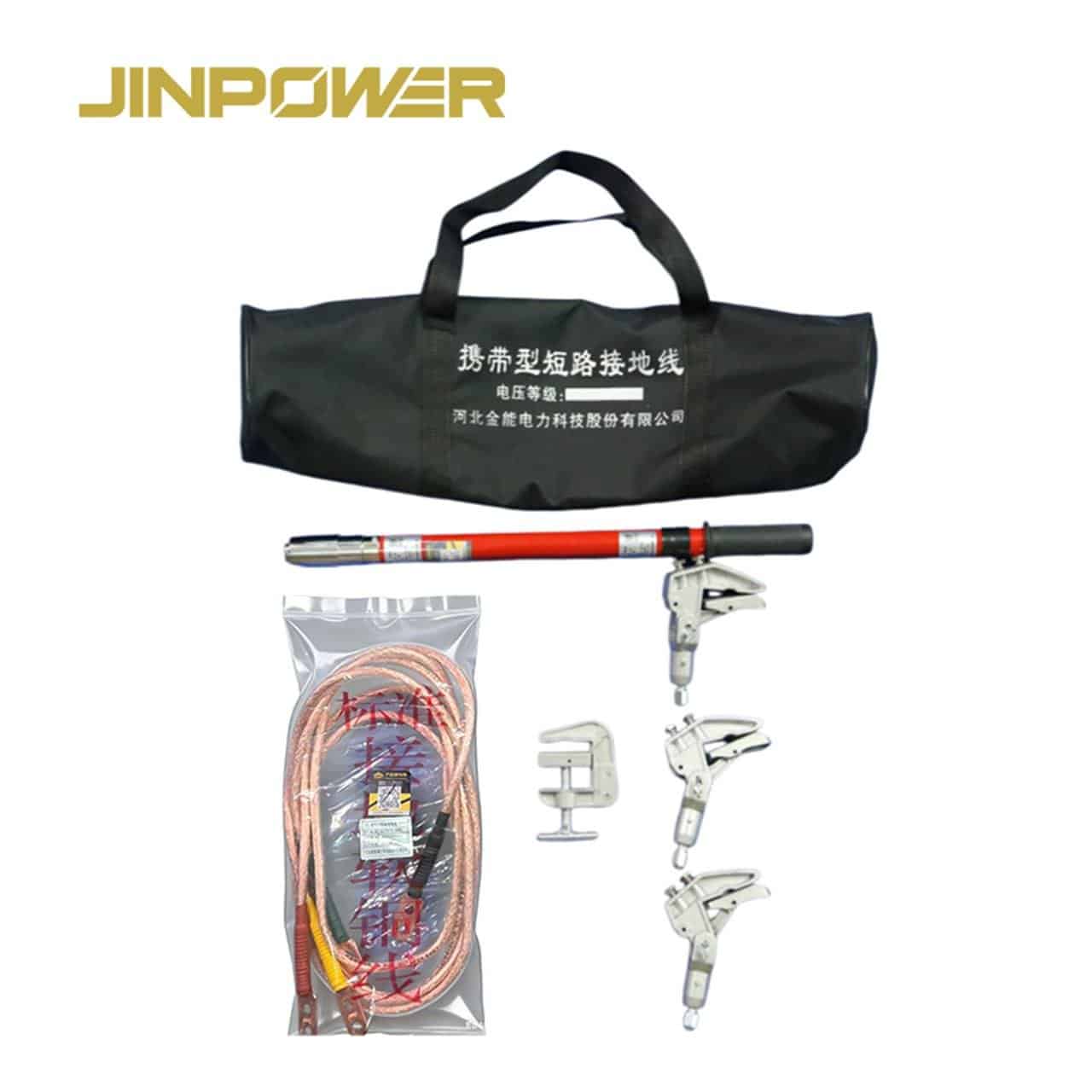
A reliable portable earthing kit supplier should prove quality through evidence, not slogans. Claims such as “high quality,” “factory direct,” or “heavy-duty copper cable” are not enough for safety-critical equipment. Buyers should look for clear fault-duty ratings, type test certificates, standard references, product marking, traceability, component-level transparency, inspection guidance, and site-fit support. Portable earthing and short-circuiting equipment must be selected as a complete safety assembly, not as loose cables and clamps. Follow local regulations and your site safety procedure.
The Short Answer: Choose Evidence, Not Promises
The best supplier is the one that makes quality verifiable.
Portable earthing kits are used in situations where equipment may need to carry serious fault current. OSHA states that portable grounding cables and clamps must be able to carry and withstand the maximum available fault current for the time needed for an overcurrent device to trip. OSHA also notes that available fault current must be determined, and that two or more parallel leads may be needed depending on the amount of current.
That means supplier evaluation should start with proof:
- What is the rated current?
- What is the rated time?
- What is the peak factor?
- Which standard was used?
- What certificate supports the rating?
- Can the physical kit be matched to its documents?
- Can the supplier match the kit to the actual site interface?
If the answer is vague, the supplier is asking you to trust a claim instead of verifying a safety asset.
Quality Signal 1: Clear Fault-Duty Rating
The first quality signal is a clearly stated fault-current rating, rated time, and peak factor.
A portable earthing kit should not be evaluated only by cable diameter, copper appearance, or clamp size. IEC 61230 states that the performance of portable earthing and short-circuiting equipment is based on the electrodynamic and electrothermal effects during short-circuit, and that withstand capability is expressed by rated current, time, and peak factor.
A stronger supplier should be able to clearly state:
- rated short-circuit current
- rated duration
- peak factor
- cable cross-sectional area
- complete assembly configuration
- clamp rating and contact interface
- whether the rating applies to the full assembly, not only one component
This matters because a cable, clamp, ferrule, and connection point work as a system. A strong cable with a weak clamp is not a strong grounding set.
Quality Signal 2: Type Test Certificate and Standard Reference
A reliable supplier should provide a type test certificate that states the rating and the test standard.
A type test certificate helps buyers verify that the supplier is not only making a verbal claim. The StayLive / Electricity Engineers’ Association technical guide states that portable earths should be supplied with a type test certificate stating the rating and the standard for the type test, and that type testing should be to IEC 61230:2008 or equivalent by a competent calibration laboratory.
A useful certificate should make these points clear:
- product or model identity
- rated current
- rated time
- test standard
- tested configuration
- laboratory or issuing body
- certificate or report reference
- relationship between the certificate and the supplied kit
A weak document only says “tested” or “qualified.” A useful document tells the buyer exactly what was tested, to which standard, and at what rating.
Quality Signal 3: Marking That Matches the Documents
If the kit cannot be tied to its documents, it is not a controllable safety asset.
Marking is not a cosmetic detail. It connects the physical equipment to its certificate, register, inspection status, and site acceptance record. The StayLive technical guide states that portable earths supplied by an equipment supplier should be marked with model or type reference, rating as per IEC 61230 or equivalent, conductor cross-sectional area, and may include the manufacturer’s name or trademark. It also states that all portable earths should be marked with either the next test due date or a unique number for inclusion in a register.
Buyers should check whether the supplied equipment shows:
- model or type reference
- rated current and time
- conductor cross-sectional area
- manufacturer or trademark
- serial number, register number, or traceability code
- next test due date where required
- marking that matches the certificate and packing documents
If the document says one thing and the kit marking says another, the kit is difficult to control after delivery.
Quality Signal 4: Component-Level Transparency
A good supplier can explain the cable, clamp, termination, ferrule, sleeving, and connection design as one complete assembly.
Portable earthing equipment is not only a cable. IEC 61230 covers equipment comprising an earthing or short-circuiting device and insulating component, and it also covers separate components such as clamps and cables with end fittings.
A supplier should be able to explain:
- cable material and cross-sectional area
- cable length and flexibility
- sheath or sleeve design
- clamp type and jaw design
- clamp contact face
- ferrule or termination construction
- connection cluster if used
- compatibility with the intended conductor, busbar, earth point, or switchgear interface
This matters because many field problems start with component mismatch. The cable may be acceptable, but the clamp may not fit the actual interface. The clamp may fit, but the lead may be too long, too short, or awkward for the site layout.
Quality Signal 5: Sensible Cable Length and Site Layout Awareness
A reliable supplier does not quote cable length blindly.
Cable length affects use, layout, storage, handling, and exposure control. The StayLive technical guide states that cables should not be significantly longer than necessary for their designed range of applications.
That is a strong supplier test. A supplier who never asks about the application may simply quote a generic length. A stronger supplier asks:
- overhead line, switchgear, substation, rail, or panel use?
- distance from phase to earth point?
- required lead arrangement?
- available access space?
- clamp connection interface?
- storage and transport method?
- whether multiple leads or matching connection points are involved?
For portable earthing kits, “longer” is not automatically safer or better. The kit should fit the intended work area.
Quality Signal 6: Inspection and In-Service Testing Guidance
A stronger supplier helps buyers manage the kit after delivery, not only before shipment.
Portable earthing equipment must remain controllable throughout its service life. The StayLive technical guide states that before each use, portable earths should be visually examined for damage, deterioration, faulty connections, cracks or scratches in insulation, marking legibility, and test due status. It also states that new portable earths should have their DC resistance measured and recorded so that deterioration can be trended over time.
A supplier should provide guidance on:
- before-use visual inspection
- periodic inspection
- storage
- cleaning
- transport
- damage withdrawal
- test due control
- register management
- replacement of questionable components
- post-fault handling according to site procedure
A supplier who only focuses on delivery but gives no lifecycle support is treating the kit like a commodity, not a safety asset.
Quality Signal 7: Site-Fit Support, Not One-Size-Fits-All Quotation
A reliable supplier asks about the site before quoting the kit.
IEC 61230 applies to portable equipment, with or without matching connection points, for temporary earthing or earthing and short-circuiting of electrically isolated or de-energized AC and DC installations, distribution and transmission networks, overhead or underground, low or high voltage.
That range is broad. It also means one generic quotation cannot fit every field condition.
A supplier should ask about:
- AC or DC system
- voltage environment
- available fault current
- clearing time
- overhead, underground, switchgear, panel, rail, or substation use
- connection point type
- clamp interface
- lead configuration
- cable length
- phase spacing
- matching connection points
- documentation and acceptance requirements
A supplier who never asks these questions may still ship a kit, but it may not be the right kit.
Red Flags: Marketing Claims Without Evidence
| Supplier Claim or Behavior | Why It Is a Red Flag | Better Evidence to Request |
|---|---|---|
| “High quality copper cable” only | Material name does not prove fault-duty performance | Rated current, rated time, and peak factor |
| “IEC standard” without a standard number | Too vague for site acceptance | IEC 61230 or equivalent reference |
| No type test certificate | Rating cannot be verified | Type test certificate stating rating and standard |
| No marking on the kit | The physical asset cannot be tied to documents | Model, rating, conductor size, test due date or register number |
| Clamp details unclear | Interface may not fit the site | Clamp type, jaw size, contact face, and rating |
| Cable length not discussed | Generic length may not fit the application | Application-based cable length recommendation |
| No inspection guidance | Lifecycle control is weak | Before-use and periodic inspection instructions |
| No traceability system | Long-term asset control becomes difficult | Serial number, register number, and documentation link |
| Price-only quotation | Safety equipment is treated as a commodity | Complete technical offer with evidence |
| Supplier does not ask about the site | One-size-fits-all risk | Site-fit questions before quotation |
Supplier Evaluation Checklist
| Evaluation Item | What to Check | Why It Matters |
|---|---|---|
| Standard reference | IEC 61230, ASTM F855, or equivalent where required | Confirms relevant product framework |
| Type test certificate | Rating, standard, and tested configuration | Supports technical acceptance |
| Fault-duty rating | Rated current, rated time, peak factor | Confirms withstand basis |
| Cable | Cross-sectional area, length, flexibility, sheath | Supports layout, handling, and inspection |
| Clamps | Type, rating, jaw design, interface fit | Prevents mismatch and weak connection |
| Terminations | Ferrules, sealing, strain relief, sleeve quality | Supports service life and inspection |
| Marking | Model, rating, conductor size, test due or register number | Supports traceability |
| Inspection guidance | Before-use and periodic checks | Supports lifecycle management |
| DC resistance record | Initial measurement and future trend basis | Supports deterioration monitoring |
| Documentation package | Certificate, datasheet, instructions, packing record | Supports receiving inspection |
| Site-fit support | Questions about system, fault duty, interface, and layout | Reduces wrong-kit selection |
What a Strong Supplier Should Ask You
Good suppliers do not only answer questions; they ask the right ones.
Before quoting portable earthing kits, a responsible supplier should ask:
- What system will the kit be used on?
- What is the available fault current?
- What is the clearing time?
- What connection interface will the clamp contact?
- Is the application overhead, underground, panel, switchgear, rail, or substation?
- Is the required standard IEC 61230, ASTM F855, or another local requirement?
- What cable length and lead configuration does the layout require?
- Do you need marking, register numbers, or test due date labels?
- What documents are required for receiving inspection?
- What inspection and storage rules apply at your site?
These questions show whether the supplier understands portable earthing as a safety system. A supplier who only asks for quantity and target price is not helping you control technical risk.
How Evidence Improves Site Acceptance
Evidence-based supply makes site acceptance easier.
When the kit arrives, the receiving team should be able to match:
- the physical kit
- the product marking
- the certificate
- the datasheet
- the packing list
- the inspection record
- the site register
If the marking, certificate, and supplied components do not align, the kit may create acceptance delays. If the supplier provides a clear evidence package, the buyer can more easily verify what was received and whether it matches the order.
Evidence also helps future maintenance. A traceable kit can be inspected, tested, recorded, and withdrawn from service when needed. An unmarked or poorly documented kit becomes harder to control every year it remains in service.
Final Rule of Thumb
Choose the supplier that makes portable earthing quality measurable, traceable, and site-specific.
The strongest supplier is not the one with the loudest claim. It is the one that can show a complete evidence chain:
standard → rating → type test → marking → components → inspection guidance → traceability → site-fit support
For portable earthing kits, quality is not a slogan. It is a documented, inspectable, and maintainable safety system.
Follow local regulations and your site safety procedure.
FAQ
What should a portable earthing kit supplier provide?
A supplier should provide a technical datasheet, type test certificate, standard reference, rating statement, marking details, inspection guidance, and traceability information. The physical kit should match the documentation.
Why is type test evidence important?
Type test evidence helps verify the rating and standard basis of the kit. IEC 61230 expresses withstand capability through rated values of current, time, and peak factor, based on electrodynamic and electrothermal effects during short-circuit.
What markings should portable earthing equipment have?
Portable earths supplied by an equipment supplier should be marked with model or type reference, rating as per IEC 61230 or equivalent, conductor cross-sectional area, and either the next test due date or a unique register number.
Is cable size enough to judge quality?
No. Cable size alone is not enough. Buyers should check the complete assembly rating, clamp design, terminations, cable length, standard reference, type test certificate, marking, and traceability.
What is a supplier red flag?
Common red flags include no type test certificate, vague “IEC standard” claims, no marking, unclear clamp data, no traceability, no inspection guidance, and quotations based only on price.
Why should a supplier ask about the worksite?
The correct kit depends on fault current, clearing time, connection interface, clamp style, cable length, lead arrangement, and application area. A supplier who asks about the site is more likely to recommend a fit-for-purpose solution.
