Portable Earthing Kit Storage and Transport: How Carrying Cases Protect Field Readiness
Portable earthing kit storage and transport should protect the complete safety assembly, not only keep the cables tidy. A field-ready kit needs clean cables, protected clamps, readable markings, traceable records, correct components, and packaging that prevents damage during transport, storage, and repeated site movement. IEC 61230 applies to portable equipment for temporary earthing or earthing and short-circuiting of isolated or de-energized AC and DC installations, including complete equipment and components such as clamps and cables with end fittings. That means storage and packing should support the kit as a controlled safety asset. Follow local regulations and your site safety procedure.
The Short Answer: Packing Is Part of Field Readiness
A carrying case helps keep a portable earthing kit complete, protected, identifiable, and ready for inspection before use.
Portable earthing equipment is not a loose collection of copper cables and clamps. It is a rated assembly used in safety-critical electrical work. OSHA states that portable grounding cables and clamps must be able to carry and withstand the maximum available fault current for the time needed for an overcurrent device to trip. This is why the kit must remain protected and traceable from storage to field use.
Good packing protects:
- cables from sharp bending, abrasion, and tangling
- clamps from impact and damaged contact faces
- labels and markings from rubbing off
- records and instructions from being separated
- components from being mixed with other kits
- the full kit from moisture, dust, and site contamination
A good carrying case does not make the kit safer by itself. It helps preserve the kit’s readiness so that the field team can inspect, verify, and control it properly before use.
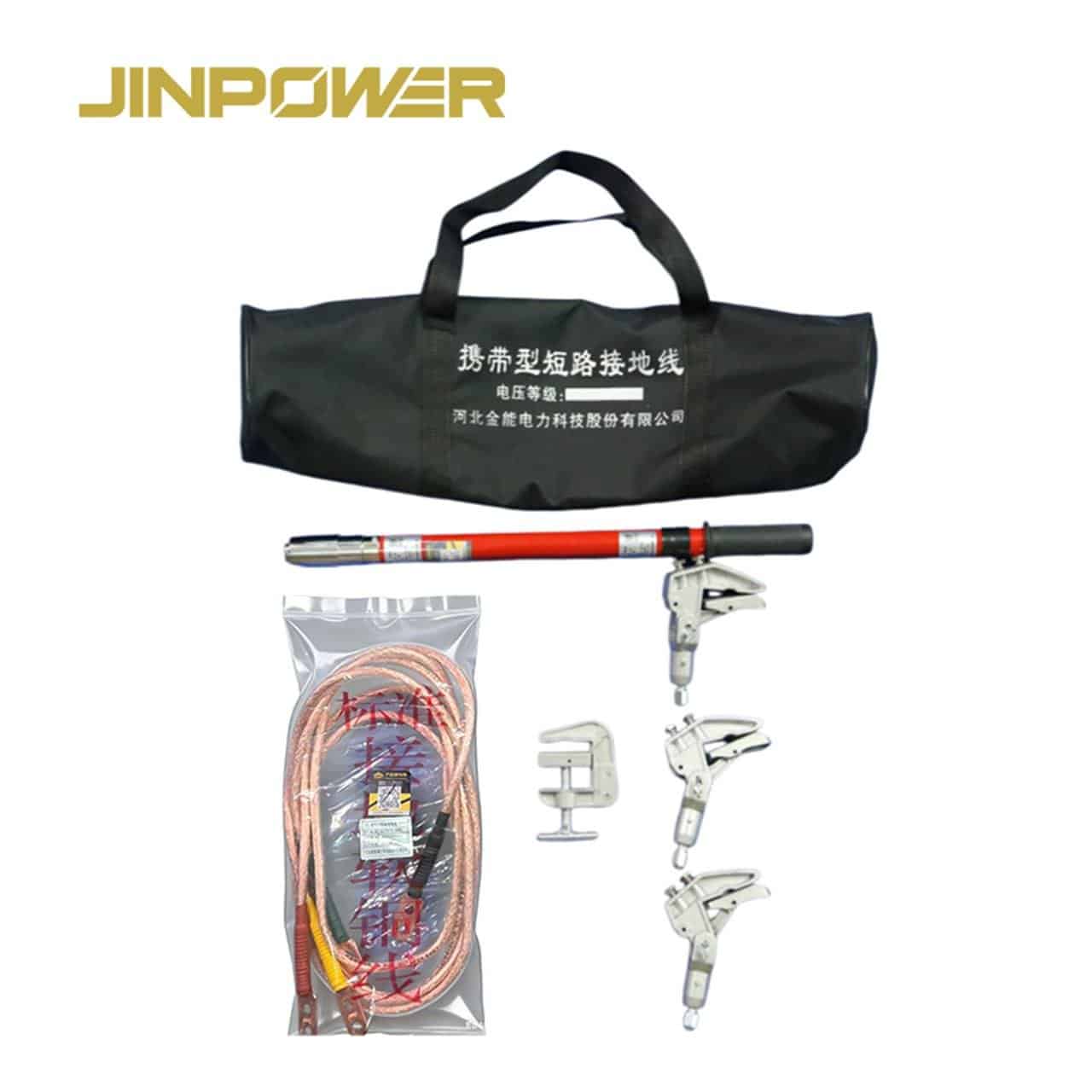
Why Storage and Transport Matter for Portable Earthing Kits
A portable earthing kit can lose field readiness before it ever reaches the worksite.
Poor storage and transport can create hidden problems. Cables may be kinked, clamps may be damaged, ferrules may be stressed, markings may become unreadable, and small components may be lost. In the field, these problems create delays, uncertainty, or unsafe substitution.
A portable earthing kit may include:
- grounding cables
- short-circuiting leads
- line clamps
- earth clamps
- end fittings
- ferrules
- insulating components where applicable
- operating poles or handles where applicable
- labels and register numbers
- inspection records
- user instructions or acceptance documents
IEC 61230 covers equipment comprising an earthing, short-circuiting, or earthing-and-short-circuiting device and insulating component, and also covers separate components such as conductive extensions, clamps, and cables with end fittings. That makes organized packing more than a convenience issue.
What Carrying Cases Protect
The carrying case should protect the parts that make the kit identifiable, inspectable, and usable.
The most obvious purpose is physical protection, but field readiness also depends on organization. A kit should arrive on site as a complete set, not as a bag of mixed parts.
A carrying case should help protect:
Cables
Cables should be stored without sharp bends, crushing, twisting, or uncontrolled tangling. Tangled cables slow inspection and increase handling damage.
Clamps
Clamp jaws, threads, springs, contact faces, and locking mechanisms should be protected from impact and contamination. A damaged clamp can make the whole kit unsuitable for the intended connection interface.
Terminations and ferrules
Terminations are high-stress areas. Packing should prevent repeated bending at the cable end and protect sleeves, seals, and fittings from abrasion.
Markings and labels
Markings connect the physical kit to its rating, certificate, register, and inspection status. The StayLive technical guide states that portable earths should be marked with model or type reference, rating, conductor cross-sectional area, and either the next test due date or a unique number for register control.
Documents and records
If the certificate, inspection sheet, register reference, or instructions are stored separately and cannot be found at site acceptance, the kit may be delayed even if the equipment itself is complete.
Soft Bags vs Hard Cases vs Aluminum Boxes
The best packing type depends on transport distance, site conditions, kit weight, and how often the kit is moved.
| Packing Type | Best Fit | Main Advantage | Watch Point |
|---|---|---|---|
| Soft carry bag | Short site movement and lighter kits | Easy to carry, flexible, lower weight | Less impact protection for clamps and fittings |
| Reinforced fabric bag | Daily field transport | Better organization and moderate protection | Needs internal separation for clamps and sharp parts |
| Plastic hard case | Vehicle transport, dust, moisture, repeated handling | Better sealing and impact protection | Heavier and may need fitted compartments |
| Aluminum box | Long-term storage, heavy-duty transport, larger kits | Strong protection and organized layout | Higher cost and weight |
| Custom compartment case | Multi-component kits with clamps, leads, and poles | Keeps components separated and traceable | Must match actual kit configuration |
The right case should match the actual kit. A light kit for routine vehicle movement may not need the same case as a large multi-lead assembly with heavy clamps and insulating components.
How Packing Supports Inspection Before Use
Good packing makes inspection faster and more reliable.
A portable earthing kit should be easy to inspect before use. If cables are tangled, clamps are buried, markings are hidden, or documents are missing, the inspection process becomes weaker.
Portable earthing maintenance guidance notes that one of the most effective and reliable ways to identify damage is visual inspection. It also highlights cables and connections as key inspection areas.
A field-ready case should allow the user to check:
- cable condition
- clamp condition
- ferrules and terminations
- insulating components where included
- marking readability
- register number or test due status
- component completeness
- document availability
- contamination or moisture
The case layout should help the inspection routine, not slow it down.
Field-Ready Kit Case Checklist
Use the carrying case as part of the equipment control system.
| Readiness Item | What to Check | Why It Matters |
|---|---|---|
| Kit identity | Case label, kit number, register number | Prevents wrong-kit selection |
| Cable storage | Coiled without sharp bends or tangles | Supports inspection and cable life |
| Clamp protection | Clamps separated from soft cables and labels | Reduces impact damage and abrasion |
| Component completeness | Cables, clamps, connectors, rods, handles, and accessories are present | Prevents site delays |
| Marking protection | Ratings, CSA, test due date, and labels remain readable | Supports traceability |
| Moisture control | Kit is dry before storage | Reduces corrosion and contamination risk |
| Document pocket | Datasheet, certificate, inspection record, or register reference available | Supports site acceptance |
| Internal compartments | Components are separated by function | Prevents mixing and damage |
| Case durability | Case fits transport method and site conditions | Protects the kit during movement |
| Cleaning condition | Dirt, oil, dust, and foreign material removed | Supports reliable inspection |
Common Packing Mistakes That Reduce Field Readiness
Most storage failures are preventable with better packing discipline.
| Mistake | Why It Hurts Readiness | Better Control |
|---|---|---|
| Loose clamps inside the bag | Impact can damage contact faces and cable insulation | Use compartments or clamp protection |
| Cables stored tangled | Inspection takes longer and handling damage increases | Coil and secure cables properly |
| Wet kit returned to storage | Moisture can promote corrosion or contamination | Dry before storage |
| Labels rubbed off | Traceability becomes weak | Protect marking areas and use case-level ID |
| Documents stored separately | Site acceptance becomes slower | Use a document pocket or register link |
| Components from different kits mixed together | Wrong assembly or rating mismatch risk | Use kit-level inventory control |
| Heavy items placed on cables | Cable deformation and sheath damage may occur | Store cables without crushing |
| Damaged case still used | Equipment protection becomes unreliable | Replace or repair the case |
| No inventory checklist | Missing items are found too late | Check completeness before transport |
| Case too small for the kit | Cables are forced into tight bends | Match case size to kit layout |
What Should Be Included in a Portable Earthing Kit Case?
A field-ready case should keep the working set together and identifiable.
Depending on the kit design and site procedure, a case may include:
- grounding cables
- short-circuiting leads
- line clamps
- earth clamps
- connectors or adapters
- ferrules and end fittings
- insulating handles or components where applicable
- operating pole sections where supplied as part of the set
- identification labels
- inspection card or register reference
- instruction sheet
- certificate copy or document reference
- inventory checklist
The goal is not to overload the case. The goal is to keep the correct kit together, protected, and ready for controlled inspection.
Marking, Register Numbers, and Traceability
Storage and transport should protect traceability as much as physical condition.
Portable earthing equipment should remain identifiable throughout its service life. StayLive guidance states that portable earths supplied by an equipment supplier should be marked with model or type reference, rating, conductor cross-sectional area, and either the next test due date or a unique number for inclusion in a register.
This matters during storage and transport because similar-looking kits may have different:
- ratings
- cable sizes
- cable lengths
- clamp types
- interface designs
- inspection status
- intended applications
A case label should help the field team quickly identify what is inside. If the case has no kit number, no inventory list, and no link to inspection status, asset control becomes weaker.
Transport Conditions: What Buyers Should Consider
The case should match how the kit will actually move.
Before choosing packing, buyers should ask:
- Will the kit be carried by one person or moved by vehicle?
- Will it be stored in a workshop, truck, substation, or container?
- Will it be exposed to dust, moisture, rain, mud, or oil?
- Are clamps heavy enough to damage cables if stored loose?
- Does the case need wheels, handles, compartments, or padding?
- Will documents travel with the kit?
- Does the case need external labeling?
- Will multiple kits be stored together?
A kit that stays in a clean electrical room may need different packing from a kit that travels between substations, outdoor switchyards, and field service vehicles.
Storage Rules That Support Field Readiness
Storage should keep the kit clean, dry, complete, and easy to inspect.
Good storage practice includes:
- store the kit dry
- avoid sharp bends in cables
- separate clamps from cable insulation
- keep documents with the kit or linked to the kit ID
- protect labels and markings
- keep the case closed when not in use
- avoid contamination from oil, mud, chemicals, and metal debris
- do not mix components from different kits
- remove damaged or questionable items from normal stock
- maintain an inspection and register system
This is especially important because portable grounding cables and clamps may need to carry severe fault current under abnormal conditions. OSHA’s requirement for maximum fault-current withstand reinforces why these kits should not be treated like ordinary field accessories.
What Buyers Should Ask Before Ordering Carrying Cases
The carrying case should be specified with the kit, not added as an afterthought.
Before ordering, ask:
- How many cables, clamps, and accessories are included in one kit?
- What are the cable lengths and diameters?
- What is the total kit weight?
- Are clamps protected from impact?
- Are compartments needed?
- Is there space for documents or an inspection card?
- Is the case suitable for vehicle transport?
- Does the case need to resist dust or moisture?
- Can the case be labeled with kit ID and rating?
- Can the case support long-term storage without forcing cable bends?
- Does the packing match the customer’s inventory and inspection process?
A good supplier should not only quote the earthing assembly. The supplier should also help define how the kit will be protected, identified, transported, and received on site.
How Carrying Cases Improve Site Acceptance
A well-packed kit is easier to receive, inspect, and approve.
During site acceptance, the receiving team may need to confirm:
- the kit identity
- the certificate or datasheet
- the rating
- the conductor size
- the clamp type
- the component count
- the marking
- the register number or test due status
- the physical condition of cables and clamps
A properly organized case makes this process faster. A poorly packed kit can delay acceptance because parts are missing, labels are unclear, documents are separated, or components do not match the order.
Final Rule of Thumb
A carrying case does not replace inspection, but it protects the conditions that make inspection possible.
For portable earthing kits, good storage and transport should protect four things:
physical condition → component completeness → marking and traceability → inspection readiness
The best packing is not simply the strongest box. It is the packing that keeps the correct assembly protected, identifiable, complete, and ready for field control.
Follow local regulations and your site safety procedure.
FAQ
Why does a portable earthing kit need a carrying case?
A carrying case helps protect cables, clamps, markings, documents, and accessories during transport and storage. It also helps keep the kit complete and easier to inspect before field use.
What should be stored in a portable earthing kit case?
Depending on the kit design, the case may hold grounding cables, clamps, connectors, insulating components, operating pole sections, labels, inspection records, instructions, and certificate references.
How does packing affect field readiness?
Poor packing can cause damaged clamps, tangled cables, missing components, unreadable labels, separated documents, and delayed site acceptance. Good packing keeps the kit organized and inspectable.
Should portable earthing kits be stored dry?
Yes. Kits should be stored dry and protected from contamination. Wet or contaminated equipment should not be returned to normal storage until it has been cleaned, dried, inspected, and controlled according to the site procedure.
What markings should be protected during storage?
Markings such as model or type reference, rating, conductor cross-sectional area, test due date, and register number should remain readable and linked to the kit records.
Is a soft bag or hard case better for portable earthing kits?
A soft bag may be suitable for lighter kits and short movement. A hard case or aluminum box is usually better when the kit is heavy, transported by vehicle, exposed to dust or moisture, or needs stronger clamp protection.