
What Is a Hot Stick (Insulating Stick)?
A hot stick (also called an insulating stick or fiberglass hot stick) is a high-dielectric FRP pole that lets trained personnel operate or manipulate energized equipment at a safe distance. With interchangeable heads, it supports live-line tasks such as switch operation, fuse replacement, applying cover-ups, or test tool placement. Its purpose is simple: combine distance + insulation to reduce shock and arc-flash exposure while enabling controlled operations under defined procedures and training.
Why It Matters — Engineering Rationale & Compliance Outcomes
A hot stick (insulating stick) lets trained personnel perform live-line working by combining distance plus high-dielectric insulation, reducing shock and arc-flash exposure while preserving operational control and auditability.
Electrical risk mechanics, simplified
- Current path control: The fiberglass hot stick keeps the rescuer/operator out of the fault circuit, minimizing touch/step potential exposure during switching, fuse handling, or cover-up application.
- Arc-flash & plasma risk: Stand-off distance reduces thermal energy and projectile risk from ionized-air faults. A smooth, contamination-resistant surface helps maintain surface resistance and lowers flashover probability.
- Impedance & predictability: A non-conductive FRP body and insulating head attachment raise system impedance, supporting predictable fault clearing instead of creating an accidental parallel path via hands or metal tools.
Compliance logic you can defend
- Standards backbone: Use insulating sticks built and tested to recognized performance families (e.g., material/performance requirements for dielectric strength and mechanical integrity), with documented inspection and testing routines aligned to site policy.
- Repeatable training: A standard tool, fixed locations, and labeled heads enable drills, competency checks, and evidence you can show auditors.
- Traceability: Serialized assets tied to dielectric/mechanical test certificates, inspection tags, and maintenance records establish a defensible compliance chain.
- Human factors: High-visibility finishes, ergonomic grips, and head geometry purpose-built for switching or fuse work reduce improvisation under stress.
Where It Applies / Boundaries
Use a hot stick (insulating stick) for energized or uncertain-voltage tasks where distance + insulation is required to control shock and arc-flash risk; do not use it outside its voltage class, without training, or as a substitute for PPE/LOTO.
Typical applications
- MV/LV switchboards & metal-clad gear: opening/closing disconnects, racking operations (with approved heads), placing/removing cover-ups.
- Overhead distribution & substations: fuse handling, switch operation, applying line tools/insulators from bucket trucks or platforms.
- Test/commissioning bays & labs: positioning voltage detectors, manipulating energized test fixtures under procedures.
- UPS/DC rooms & traction power: operating DC switches, moving protective sleeves/guards on busbars.
- Access & readiness: store sticks in plain sight, keep approach aisles clear, label head attachments, and map locations on the room one-line/Layout plan.
Limits and exclusions
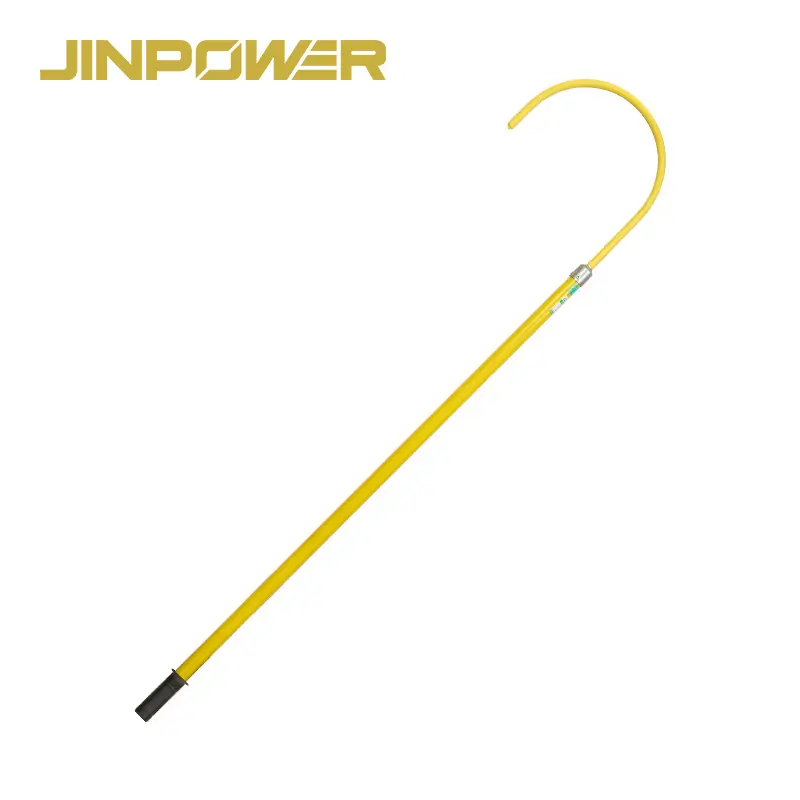
- No rescue use: for human extraction, use a rescue hook; hot sticks are not designed for controlled body contact.
- No load handling: do not lift/drag equipment unless the head, stick, and procedure are rated for that exact mechanical task.
- No substitution for controls: do not replace LOTO, insulated gloves, or arc-rated clothing; energized work permits still apply.
- No out-of-class use: never exceed the stick’s voltage class or use with damaged/contaminated surfaces (tracking risk).
- No loss-of-control reaches: avoid spans that compromise grip, sightline, or minimum approach distance (MAD).
Environmental & human-factor boundaries
- Surface condition: moisture, dust, salt, or oils decrease surface resistance—clean and dry before use; inspect sleeves and joints.
- Storage & transport: protect from UV and abrasion; use bags/tubes where needed; keep away from sharp edges and fasteners.
- Staffing & PPE: trained operator plus spotter/communicator; PPE per arc-flash/shock labels; rehearse head changes before field work.
- Documentation: energized-work permit (when applicable), inspection & testing records, and stick serials linked to the tool log.
JINPOWER Hot Stick
The configuration below maps this page’s hot stick (insulating stick) requirements to JINPOWER’s deliverables—parameter by parameter, with evidence paths for audit.
Requirement → JINPOWER parameter / evidence
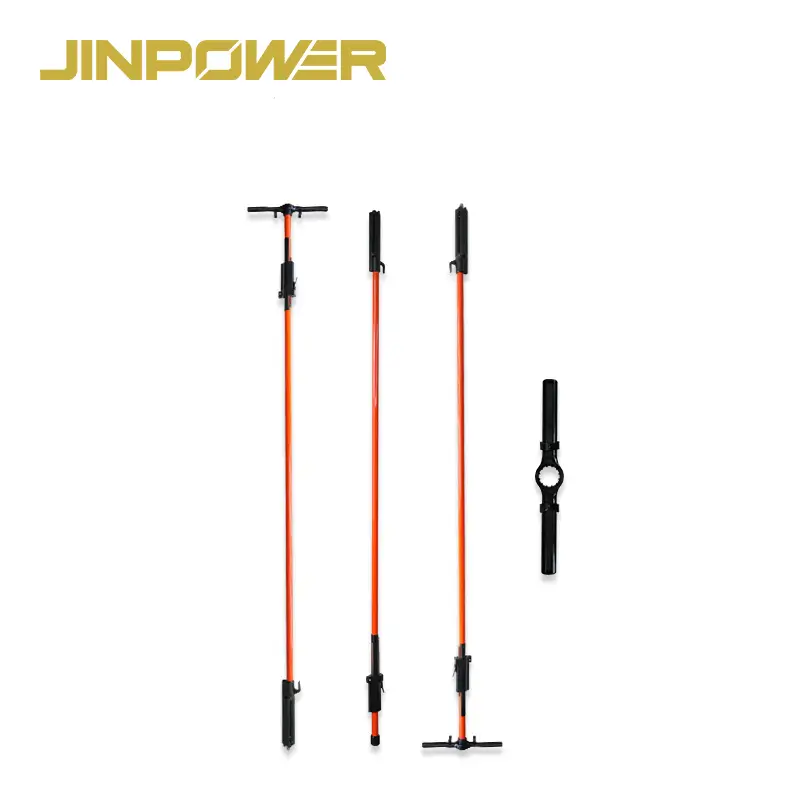
- Body construction (FRP, solid/foam-filled, hi-viz finish): fiberglass-reinforced pole; solid or foam-filled build options; smooth contamination-resistant surface; high-visibility coating; ergonomic grip zone.
- Form factor & locks: rigid and telescopic versions; lock options (e.g., twist-lock / push-button). Section overlap and lock integrity validated at assembly.
- Length & reach: typical overall lengths spanning short room work to extended reach; transport length controlled for vehicle or cabinet storage; length selection guidance provided against MAD and aisle geometry.
- Heads / attachments: switch head, fuse puller, clamp/“shotgun” interface, universal spline, voltage-detector interface, cover-up applicator; compatibility list supplied per order.
- Mechanical performance: deflection and torsion checks recorded in build traveler; joint play limits verified at end-of-line inspection.
- Markings & traceability: serial number + batch/date code on pole; operating pictogram; label language options (English + local).
- Conformity & test evidence: factory dielectric and mechanical test certificates issued per serial or batch and matched to delivered items; statement of conformity to applicable insulating-stick performance families; recommended inspection/testing intervals in user instructions.
- Documentation set: instructions; pre-use and periodic inspection checklists; cleaning/maintenance notes; warranty statement.
- Storage & protection: wall bracket or protective bag/tube; end caps; optional spare locks/heads kit.
- Acceptance support: contents checklist, serial–certificate matching sheet, photo-record guidance; dimensional drawings for storage placement and reach validation.
- Lifecycle guidance: inspection cadence, criteria for repair/retirement, and replacement workflow for surface damage or lock failure.
Note: Selection of length, form factor, and head kit remains site-specific. JINPOWER provides dimensional drawings and a brief placement guide so Electrical Supervisors can verify reach vs. MAD and clear egress lines before sign-off.



FAQ
Where should a hot stick be installed and how many do we need?
Store hot sticks in plain sight within electrical rooms and on vehicles used for live-line tasks. Map locations on the room layout so operators can retrieve a stick without crossing likely hazard zones. Quantity is risk-based: at least one per room plus heads/attachments sized to the tasks; add spares for long aisles and outdoor yards.
How do we choose the right length and form factor (rigid vs telescopic)?
Size against minimum approach distance (MAD), aisle width, and sightlines. Rigid sticks offer maximum stiffness and fewer joints; telescopic sticks optimize transport length and reach flexibility but require lock integrity checks. Validate reach with a site walk-down before approval.
Which standards and tests apply, and how often should we inspect?
Use insulating sticks built and tested to recognized insulating-stick performance standards (e.g., material, dielectric, and mechanical requirements used in industry). Maintain pre-use visual checks, documented periodic inspections, and scheduled dielectric/mechanical tests per site policy and local regulations. Increase frequency in UV/dust/salt/humidity environments.
Can a hot stick replace PPE or LOTO?
No. A hot stick provides distance + insulation for specific energized tasks under permit or procedure. It does not replace lockout/tagout, insulated gloves, or arc-rated clothing. Follow the full energized-work control stack.
What’s the difference between a hot stick and a rescue hook?
A hot stick is a platform tool with interchangeable heads for operating equipment (switching, fuse work, cover-ups). A rescue hook is a purpose-built extraction tool with a rounded, sleeved U-head for controlled contact with a person during emergency separation. Use each for its intended role.
