
Portable Earthing Kit vs Fixed Earthing Switch: When Each Option Fits Best
A portable earthing kit and a fixed earthing switch both support electrical grounding safety, but they are not the same solution. A fixed earthing switch is built into switchgear or electrical equipment for a defined grounding position. A portable earthing kit is removable field equipment used where temporary grounding is needed at the actual work location.
The right choice depends on the site, the equipment design, the work point, the connection interface, the available fault current, the access method, and the site safety procedure.
In simple terms:
Fixed earthing switch = built-in grounding for designed equipment.
Portable earthing kit = flexible temporary grounding for field work points.
Follow local regulations and your site safety procedure.
The Short Answer: Portable Means Flexible, Fixed Means Built-In
Use a fixed earthing switch when the grounding point is part of the equipment design. Use a portable earthing kit when temporary grounding is needed at a field work point that changes by task, site, or access condition.
A fixed earthing switch is often used inside switchgear, fixed bays, or designed electrical equipment. It is part of the equipment system and may include interlocking, position indication, and rated switching performance.
A portable earthing kit is used outside the fixed equipment design. It may include cables, clamps, end fittings, operating poles, connectors, labels, documents, and a carrying case. It must match the actual field connection point.
The two options can both be useful. The key is not choosing which one is “better.” The key is choosing which one fits the work condition.
What Is a Portable Earthing Kit?
A portable earthing kit is removable equipment used for temporary earthing or earthing and short-circuiting.
It is normally used after the equipment or line has been isolated and absence of voltage has been verified according to the site procedure. It is not a voltage-testing tool.
A portable earthing kit include:
- grounding cables
- short-circuiting leads
- line clamps
- earth clamps
- ferrules and end fittings
- connectors or adapters
- operating pole or insulating handle where required
- labels and markings
- inspection records
- carrying case
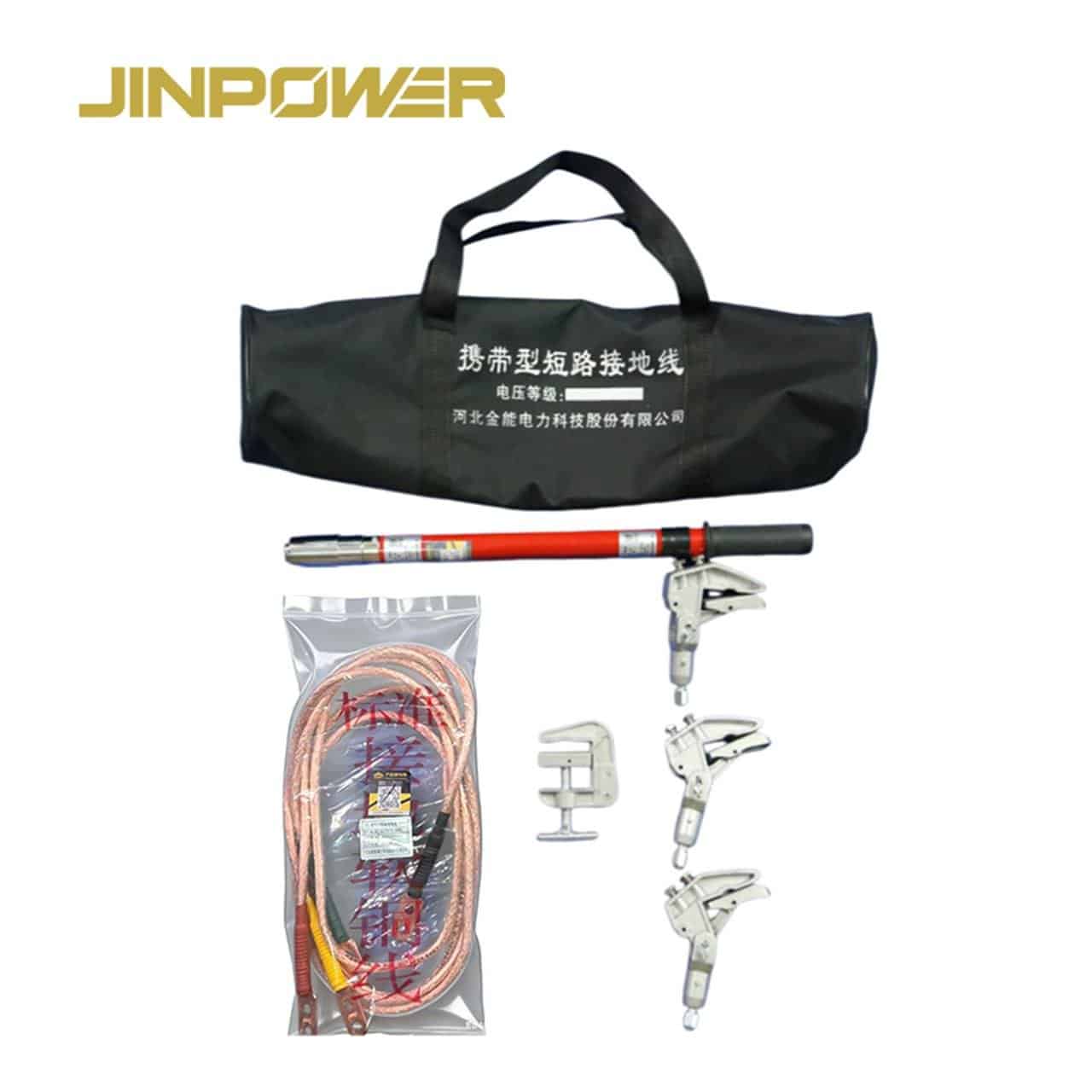
Portable earthing kits are commonly used in:
- substations
- overhead line maintenance
- underground cable work
- switchgear and panel maintenance
- temporary outage work
- field repair work
- locations without built-in grounding points
Their biggest advantage is flexibility. Their biggest risk is mismatch. The kit must match the voltage class, fault duty, clamp interface, cable length, and site procedure.
What Is a Fixed Earthing Switch?
A fixed earthing switch is a built-in grounding device designed as part of switchgear or electrical equipment.
It is normally installed in a fixed position and used to earth a defined section of equipment. It may be mechanically or electrically interlocked with other switching devices. It may also provide position indication to help operators confirm the device state.
A fixed earthing switch is commonly used in:
- metal-enclosed switchgear
- high voltage switchgear bays
- substation equipment
- indoor or outdoor switchgear
- fixed maintenance positions
- repeated switching operations
- engineered electrical systems
Its biggest advantage is repeatability. It is part of the designed equipment layout. Its biggest limitation is that it only covers the specific section or position it was designed to earth.
A fixed earthing switch does not automatically cover every possible work point around the equipment.
Side-by-Side Comparison
| Factor | Portable Earthing Kit | Fixed Earthing Switch |
|---|---|---|
| Type | Removable field equipment | Built-in switchgear or equipment component |
| Main role | Temporary grounding at the actual work point | Designed grounding within fixed equipment |
| Flexibility | High | Limited to designed positions |
| Main interface | Clamps, cables, adapters, grounding points | Fixed mechanical and electrical interface |
| Best fit | Field maintenance, overhead lines, substations, underground cables, temporary work | Switchgear, fixed bays, repeated operation, designed maintenance positions |
| Key selection point | Cable size, cable length, clamp type, fault current, clearing time | Voltage class, short-circuit rating, interlocking, position indication, switchgear compatibility |
| Main risk | Wrong clamp, wrong length, poor inspection, mismatched rating | Wrong status assumption, interlock issue, maintenance issue, limited coverage |
| Inspection focus | Cables, clamps, ferrules, markings, records, storage condition | Mechanical operation, interlocking, position indication, maintenance record |
| Documentation | Kit rating, certificate, inspection record, component checklist | Switchgear standard, device rating, maintenance documentation |
| Field readiness | Depends on storage, inspection, component completeness | Depends on installed equipment condition and operating logic |
When a Portable Earthing Kit Fits Best
A portable earthing kit fits best when the grounding point is temporary, movable, or site-specific.
It is often the better option when the work location changes or when fixed grounding equipment cannot reach the actual work point.
Portable earthing kits are especially useful for:
Overhead line work
Overhead line work may involve exposed conductors, conductor spacing, pole or tower access, and changing work locations. A portable kit can be configured with suitable conductor clamps, cable lengths, and operating tools.
Substation maintenance
Even in substations with fixed equipment, the actual maintenance point may not always be fully covered by a built-in earthing switch. Portable grounding may be needed at a specific busbar, structure, equipment point, or temporary isolation zone.
Underground cable work
Underground cable work may involve terminations, test points, bonding points, confined access, and cable identification. The required grounding interface may differ from fixed switchgear equipment.
Emergency or outage work
During temporary outage or emergency work, the team may need a field-ready grounding set that can be moved, inspected, and applied to different approved connection points.
Equipment without built-in earthing function
Some equipment or field sections may not have a fixed earthing switch. In these cases, a portable kit may be required by the site procedure.
The key point is simple:
Portable earthing kits are selected for field flexibility, but they must still be rated, matched, inspected, and documented.
When a Fixed Earthing Switch Fits Best
A fixed earthing switch fits best when grounding is part of the designed equipment function.
It is often the better option when the grounding position is known, repeated, and integrated into switchgear operation.
Fixed earthing switches are especially useful for:
Metal-enclosed switchgear
In switchgear, a fixed earthing switch can provide a designed grounding function within a controlled equipment structure.
Repeated maintenance positions
When the same equipment section is repeatedly isolated and grounded for maintenance, a built-in earthing switch can support a more consistent process.
Interlocked operation
Fixed earthing switches can be integrated with switchgear interlocking logic to reduce incorrect operation.
Designed short-circuit making requirement
Some fixed earthing switches are specified with short-circuit making capability according to the switchgear design. This is different from the way portable earthing kits are selected for withstand duty.
Controlled equipment bays
In fixed substation or industrial switchgear bays, the earthing switch may be part of the planned equipment configuration and maintenance method.
The key point is:
Fixed earthing switches are strong for designed, repeatable grounding positions, but they do not automatically cover all field work points.
Can Portable Earthing Kits and Fixed Earthing Switches Be Used Together?
Yes. In some systems, both may exist because they serve different grounding layers.
A fixed earthing switch may ground a defined section of switchgear. A portable earthing kit may still be required closer to the actual work point, depending on the site procedure and work scope.
For example:
- a fixed earthing switch may be used inside a switchgear bay
- a portable kit may be needed for a nearby cable termination
- a fixed switch may ground one section
- a portable kit may be needed for visual, local, or task-specific grounding
- the site procedure may require additional temporary grounding after voltage verification
Do not assume one option automatically eliminates the other.
The correct decision should come from the electrical safety procedure, switching plan, work permit, equipment design, and qualified site assessment.
What Buyers Should Check Before Choosing
The right grounding method depends on the work condition, not only the product category.
| Check Point | Why It Matters |
|---|---|
| Work location | Determines whether grounding is fixed, temporary, or both |
| Voltage class | Affects equipment rating and application range |
| Available fault current | Important for grounding equipment rating and switchgear design |
| Clearing time | Important for portable grounding withstand selection |
| Connection interface | Determines clamp type or fixed switchgear interface |
| Access method | Determines whether field-applied tools or built-in operation fit better |
| Interlocking requirement | Important for fixed earthing switch selection |
| Position indication | Helps confirm equipment state in fixed switchgear |
| Cable length | Important for portable kit layout and handling |
| Clamp type | Critical for portable grounding reliability |
| Inspection method | Portable kits and fixed devices need different inspection routines |
| Documentation | Supports acceptance, maintenance, and traceability |
| Site procedure | Final decision must match the approved safety method |
Safety Logic: Neither Option Replaces Voltage Verification
Grounding does not replace proving dead.
Before grounding equipment is used, the work point should be verified as de-energized using suitable voltage detection equipment and the approved site procedure.
A fixed earthing switch is not a voltage detector.
A portable earthing kit is not a voltage detector.
Grounding should not be used as the first way to discover whether equipment is still energized.
For circuits over 600 volts nominal, test equipment should be checked for proper operation immediately before and immediately after the test under OSHA requirements.
The safe logic is:
isolate → verify absence of voltage → apply grounding only under the approved procedure
This principle applies whether the grounding method is fixed, portable, or a combination of both.
Common Buyer Mistakes
Mistake 1: Assuming a fixed earthing switch covers every work point
A fixed earthing switch covers the section it is designed to earth. It may not cover all nearby equipment, cable ends, overhead connections, or field work points.
Mistake 2: Assuming a portable earthing kit can replace all fixed grounding functions
A portable kit is flexible, but it does not replace the engineered function of a fixed earthing switch inside designed switchgear.
Mistake 3: Buying portable kits without fault current and clearing time
Cable size and clamp appearance are not enough. The kit must match the required electrical duty.
Mistake 4: Ignoring clamp interface
A portable kit must fit the actual conductor, busbar, fixed point, earth point, or structure. Wrong clamps can make the kit unsuitable.
Mistake 5: Treating an earthing switch as proof that the work point is dead
A switch position or indication should not replace approved voltage verification.
Mistake 6: Ignoring interlocking and position indication
For fixed earthing switches, interlocking logic, mechanical operation, and position indication are important parts of reliability.
Mistake 7: Using one universal portable kit for every site
Substation, overhead line, switchgear, and underground cable work may need different cable lengths, clamps, accessories, and storage methods.
Mistake 8: Forgetting inspection and maintenance records
Portable kits need inspection records. Fixed earthing switches need maintenance records. Both require traceability.
What a Good Supplier Should Ask
A professional supplier should not recommend a grounding solution without understanding the site.
For a portable earthing kit, the supplier should ask:
- What is the voltage class?
- What is the available fault current?
- What is the clearing time?
- Where will the kit be used?
- What connection points are available?
- What clamp type is required?
- What cable length is needed?
- Is an operating pole or insulating handle required?
- What documents or certificates are needed?
- How will the kit be stored and transported?
For a fixed earthing switch, the supplier or switchgear designer should ask:
- What switchgear type is used?
- What voltage class applies?
- What short-circuit duty is required?
- Is making capacity required?
- What interlocking is required?
- What position indication is required?
- Is it indoor or outdoor installation?
- What maintenance access is available?
- Which standard or project specification applies?
A good recommendation starts with the site condition, not a generic product name.
How to Decide Which Option Fits Best
Start from the work point.
Ask these questions:
- Is the grounding point built into the equipment design?
- Is the same grounding position used repeatedly?
- Is interlocked switchgear operation required?
- Does the work point change from task to task?
- Is the work on overhead lines, underground cables, or temporary field points?
- Are the required clamps and cable lengths site-specific?
- Does the site procedure require local portable grounding?
- Does the fixed earthing switch cover the actual work zone?
- Is voltage verification required before grounding?
- What documentation is needed for acceptance and inspection?
If the grounding function is built into switchgear and used repeatedly, a fixed earthing switch may fit best.
If grounding is required at different work points or interfaces, a portable earthing kit may fit best.
If both conditions exist, both may be needed.
Final Rule of Thumb
Choose a fixed earthing switch for designed, repeatable switchgear grounding. Choose a portable earthing kit for flexible, temporary, site-specific grounding.
Do not treat either option as a substitute for:
- isolation
- voltage verification
- inspection
- rating confirmation
- documentation
- approved site procedure
Use this simple summary:
Fixed earthing switch = built-in, repeatable, switchgear-integrated.
Portable earthing kit = flexible, temporary, field-applied.
The safest and most reliable choice is the one that matches the actual work point, fault duty, access condition, interface, and site safety procedure.
Follow local regulations and your site safety procedure.
FAQ
What is the difference between a portable earthing kit and a fixed earthing switch?
A portable earthing kit is removable field equipment used for temporary grounding at the work point. A fixed earthing switch is a built-in device used to earth a defined section of switchgear or electrical equipment.
When should a portable earthing kit be used?
A portable earthing kit is suitable when grounding is needed at temporary, changing, or field-specific work points, such as overhead lines, substations, underground cable work, switchgear maintenance, or emergency field work.
When is a fixed earthing switch better?
A fixed earthing switch is better when the grounding point is part of the equipment design, such as in switchgear bays, metal-enclosed switchgear, or repeated maintenance positions with interlocking and position indication.
Can a fixed earthing switch replace portable earthing equipment?
Not always. It only covers the section it is designed to earth. Portable earthing may still be needed at the actual work point, depending on the site procedure.
Can portable earthing kits and fixed earthing switches be used together?
Yes. In some systems, a fixed earthing switch may ground a defined section, while a portable earthing kit may be used closer to the actual work point or for additional site-specific grounding.
Does grounding replace voltage verification?
No. Grounding does not replace voltage verification. The work point should be verified as de-energized with suitable test equipment before grounding is applied under the approved site procedure.
What should buyers check before ordering portable earthing equipment?
Buyers should confirm voltage class, available fault current, clearing time, application scenario, connection interface, clamp type, cable size, cable length, accessory needs, documents, and storage method.
What should buyers check before specifying a fixed earthing switch?
Buyers or project engineers should confirm switchgear type, voltage class, short-circuit duty, making capacity if required, interlocking, position indication, indoor or outdoor installation, standard reference, and maintenance access.
