
Common Field Mistakes with Temporary Earthing: How to Reduce Human-Error Risk
Temporary earthing mistakes usually do not come from one careless action alone. They often come from weak planning, unclear equipment ratings, poor inspection habits, missing traceability, and overreliance on field memory. Portable earthing equipment is part of a protective grounding system, and OSHA requires grounding cables and clamps to carry the maximum available fault current for the time needed for protective devices to clear the fault. That means human-error risk must be reduced before the crew reaches the work point: in planning, equipment selection, inspection, labeling, briefing, and control records. Follow local regulations and your site safety procedure.
The Short Answer: Most Mistakes Start Before the Kit Is Used
Most temporary earthing mistakes begin in planning, selection, and control — not only at the moment of field use.
A portable earthing kit should not be treated as a simple cable-and-clamp accessory. IEC 61230 applies to portable equipment for temporary earthing or earthing and short-circuiting of electrically isolated or de-energized AC and DC installations and networks, whether overhead or underground, low or high voltage. That scope already tells us the equipment belongs in a controlled safety system, not in casual field improvisation.
The best way to reduce human error is to control four things before work starts:
- The correct equipment rating
- The correct connection interface
- The correct inspection and traceability status
- The correct job briefing and hold points
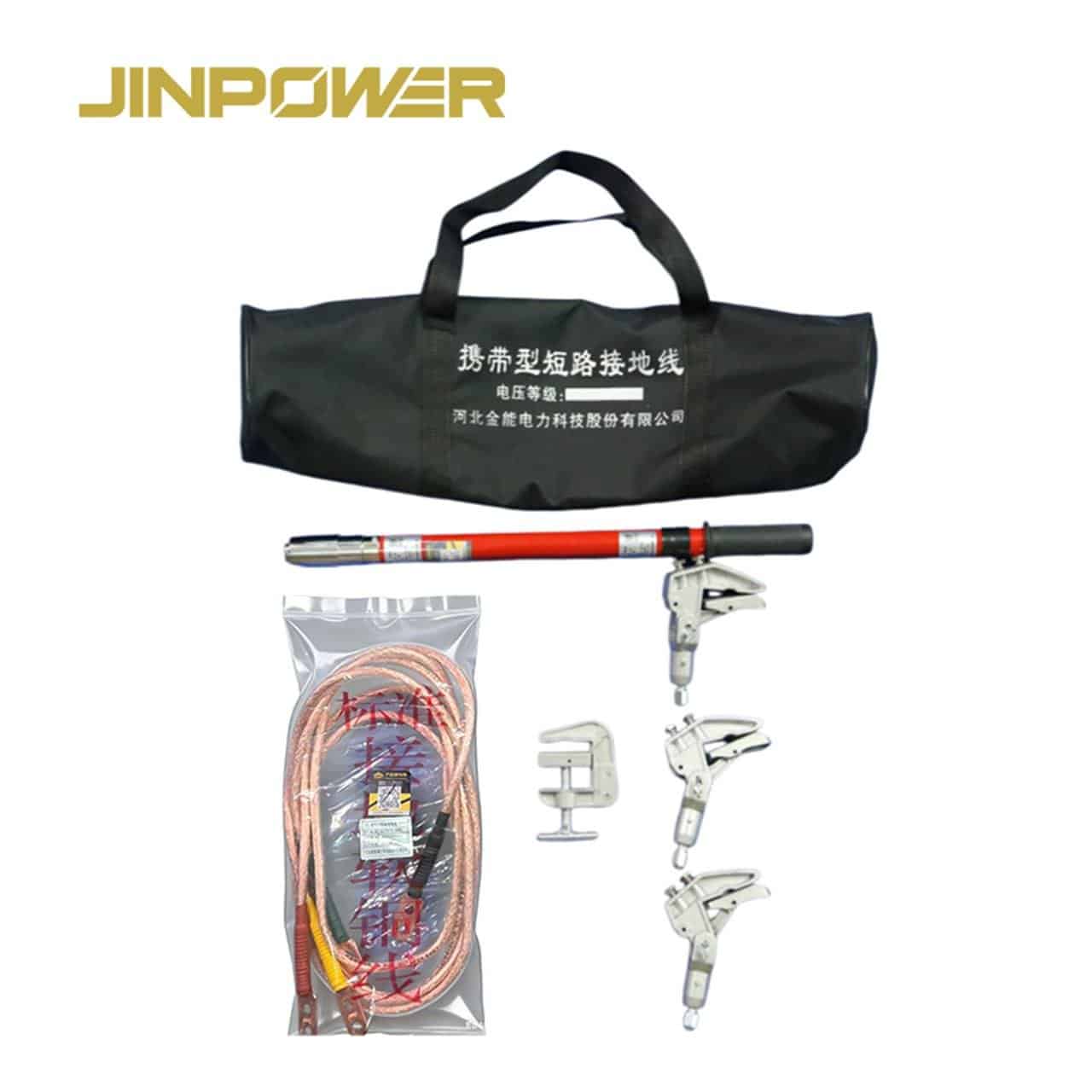
Mistake 1: Treating Temporary Earthing as a Routine Accessory
Temporary earthing equipment should be treated as engineered safety equipment, not as a routine field accessory.
This mistake happens when teams focus only on whether a kit is available, instead of whether the kit is suitable for the job. OSHA states that portable grounding cables and clamps must carry and withstand the maximum available fault current until the overcurrent device trips. OSHA also notes that, depending on the available fault current, two or more leads in parallel may need to be installed.
A better control is to define the equipment requirement before the job:
- system and work point
- available fault current
- clearing time
- cable and clamp configuration
- traceability and inspection status
Mistake 2: Ignoring Fault Current and Clearing Time
A kit that is not rated for the available fault current is not a suitable kit, even if it looks correct.
Fault current and clearing time are not optional engineering details. OSHA requires protective grounding equipment to be capable of conducting the maximum fault current that could flow at the grounding point for the time necessary to clear the fault. OSHA also requires grounding impedance to be low enough that it does not delay protective-device operation if the line or equipment is accidentally energized.
This is one of the most important human-error controls. If the fault duty is unclear, the crew may take a kit into the field that was never properly matched to the site condition.
Mistake 3: Using the Wrong Clamp or Contact Interface
A correctly rated kit can still create risk if the clamp does not match the actual connection point.
This is a common field-management failure. A kit may have the right rating on paper, but the wrong clamp for the conductor, busbar, earth point, or equipment interface. That creates pressure for field improvisation, which is exactly the kind of situation a management system should prevent.
A better control is to specify the contact point in the RFQ and job briefing:
- conductor type
- busbar or round conductor
- earth point design
- required clamp style
- any site-specific interface limitation
Mistake 4: Skipping Visual Inspection Before Use
Visual inspection is one of the simplest ways to catch equipment risk before it becomes a field error.
A portable earthing user and maintenance guide states that one of the most effective and reliable ways to identify damage to portable earthing equipment is by visual inspection. The same guide notes that maintenance frequency may depend on operating environment, user experience, and maintenance policy, with shorter intervals appropriate in harsher environments.
A field team should not rely on memory or habit. The condition of cables, clamps, ferrules, insulation, labels, and contact surfaces should be controlled by a defined inspection routine.
Mistake 5: Losing Marking, Traceability, or Test Status
If the kit cannot be identified, rated, and traced, it is already a control risk.
Technical guidance for portable earths expects supplied equipment to be marked with:
- model or type reference
- rating as per IEC 61230 or equivalent
- conductor cross-sectional area
- next test due date or unique register number
The same guidance also states that new portable earths should have their DC resistance measured and recorded.
This matters because human error increases when equipment becomes anonymous. If no one can quickly confirm what the kit is, what it is rated for, and when it is due for inspection or testing, the kit should not be treated as a normal controlled asset.
Mistake 6: Ignoring Induced Voltage and Backfeed
De-energized does not always mean electrically safe.
OSHA’s grounding guidance explains that grounds can discharge induced voltage from nearby energized lines, discharge voltage from unexpected backfeed, and help protective devices trip if a normal feed is inadvertently closed. That means temporary earthing is not only about a visible connection. It is part of a broader worker-protection logic.
Human error often appears when teams overtrust the word “de-energized” and under-recognize residual or reappearing hazards. A better management approach is to include induced voltage, backfeed, and accidental re-energization in the job briefing and risk review.
Mistake 7: Reusing Equipment After Fault Duty Without Control Review
Equipment exposed to fault current should never be returned to normal service by habit.
Grounding equipment can be stressed by a fault event. Industry safety guidance states that grounding equipment that has experienced a fault current should be permanently removed from service. This is a lifecycle-control issue, not a field judgment call to be made casually after the event.
A better control is simple:
- isolate suspect equipment from normal stock
- record the event
- prevent uncontrolled reuse
- replace equipment according to the site procedure and supplier guidance
Mistake 8: Relying on Memory Instead of a Job Briefing Checklist
Human-error risk rises when crews rely on memory instead of a defined pre-job checklist.
A job briefing checklist should not become a long operating manual. It should confirm the critical management fields that prevent wrong assumptions:
- correct work point
- correct kit identity
- correct rating
- correct clamp interface
- current inspection status
- traceability number
- expected hazards
- hold points for uncertainty
This keeps the focus where it belongs: not on teaching an operation sequence, but on preventing predictable planning and control failures.
Common Field Mistakes and Better Controls
| Field mistake | Why it happens | Risk created | Better control |
|---|---|---|---|
| Treating temporary earthing as a routine accessory | Weak planning | Wrong equipment for the duty | Engineered grounding plan |
| Ignoring fault current and clearing time | Missing system data | Under-rated kit selection | Confirm duty before ordering or use |
| Using the wrong clamp interface | RFQ or job scope unclear | Field improvisation | Define connection points early |
| Skipping visual inspection | Time pressure or weak routine | Damaged equipment in service | Use a pre-use inspection checklist |
| Losing marking or traceability | Poor asset control | Kit cannot be verified | Register, label, and test-status control |
| Ignoring induced voltage or backfeed | Overconfidence after isolation | Residual shock risk | Include these hazards in the briefing |
| Reusing equipment after fault duty | Cost pressure or unclear rule | Hidden damage risk | Remove from service and record the event |
| Relying on memory | Weak supervision | Missed checks and assumptions | Structured job briefing checklist |
Human-Error Reduction Checklist for Temporary Earthing
| Control point | What to verify | Why it reduces human error |
|---|---|---|
| Work scope | System, work point, voltage environment | Prevents wrong kit selection |
| Fault duty | Maximum fault current and clearing time | Prevents under-rated equipment use |
| Kit identity | Model, rating, conductor size, unique ID | Prevents equipment mix-up |
| Clamp interface | Actual conductor, busbar, or earth point | Prevents field improvisation |
| Inspection status | Visual condition and test due status | Prevents damaged equipment use |
| Traceability | Register and label status | Supports accountability |
| Post-event control | Fault-duty withdrawal rule | Prevents unsafe reuse |
| Job briefing | Roles, checks, hazards, and hold points | Reduces memory-based errors |
What Buyers Can Do Before the Equipment Reaches the Site
Many field mistakes can be reduced during procurement.
A stronger RFQ should not only ask for “portable earthing kits.” It should define:
- required rating
- conductor cross-sectional area
- clamp type
- lead configuration
- marking requirements
- test due date or register-number expectation
- documentation package
- inspection and maintenance guidance
This approach aligns with the way IEC 61230 defines the equipment category and with technical guidance that expects clear marking, traceability, and DC resistance records for new portable earths.
Final Rule of Thumb
Temporary earthing human-error risk is reduced by control, not by confidence.
The safest management approach is to treat every temporary earthing task as a controlled chain:
planning → equipment selection → inspection → traceability → job briefing → event control → record keeping
If any link is weak, the risk is not only a field problem. It is a management problem. Follow local regulations and your site safety procedure.
FAQ
What are the most common field mistakes with temporary earthing?
Common mistakes include wrong kit rating, wrong clamp interface, poor visual inspection, missing traceability, ignoring induced voltage or backfeed, and uncontrolled reuse after fault-duty exposure.
Why is fault current important for portable grounding equipment?
Because OSHA requires grounding cables and clamps to carry and withstand the maximum available fault current for the time needed for the overcurrent device to trip.
Can de-energized equipment still be dangerous?
Yes. OSHA explains that grounding can protect workers from induced voltage, unexpected backfeed, and accidental re-energization.
What should be checked before using portable earthing equipment?
The management-level checks should include identity, rating, cable and clamp condition, conductor cross-sectional area, traceability, test due status, and clamp compatibility.
Should portable earthing equipment be reused after fault current exposure?
It should not be returned to normal service by habit. Industry safety guidance states that grounding equipment exposed to fault current should be permanently removed from service.
