
Are Latex Gloves Electrically Insulated?
Yes, specialized latex gloves can act as an insulated—but not all latex gloves do.
Introduction – Clearing Up the Myth
When people ask “Are latex gloves insulated?” or “Are latex gloves electrically insulated?”, the answer is not as simple as “yes” or “no.”
Many people think any latex glove can protect against electricity—especially if they’ve only seen disposable medical or cleaning gloves. But here’s the truth: not all latex gloves are designed for electrical insulation.
Yes, natural latex itself has good insulating properties. But to safely handle live electrical work, a glove must do much more than just be “rubber.” It must be made from high-grade natural latex, engineered to exact standards, tested for dielectric strength, and rated for a specific voltage class.
So the real answer is: only professionally certified latex gloves, designed and tested for electrical insulation, can protect you from live electricity. Regular household or medical latex gloves? They’re simply not up to the job.
Next, let’s see exactly how latex gloves provide true electrical insulation—and what makes them so different from everyday gloves.
How Do Latex Gloves Provide Electrical Insulation?
Natural latex is known for its flexibility and excellent dielectric properties. But what makes it truly reliable for live electrical work is the way it’s processed, tested, and certified.
Here’s how it works:
When high-quality natural latex is manufactured into an electrical insulating glove, it’s formulated to have a high dielectric strength—meaning it can resist high voltages without allowing current to pass through. But this isn’t just theory. Every glove must prove its insulating power through rigorous lab testing.
For example, JINPOWER’s professional latex insulating gloves go through:
- Proof Voltage Tests: To ensure they can safely handle their maximum rated voltage.
- Dielectric Strength Tests: To check the glove’s material can resist breakdown under extreme conditions.
- Leakage Current Checks: To confirm minimal current leakage, keeping the user safe.
To put it in numbers:
- Our Class 00 latex gloves are tested up to 2.5 KV AC with a maximum working voltage of 500V.
- At the top end, Class 4 latex gloves withstand up to 50 KV AC in dielectric strength, with a maximum working voltage of 36,000V.
This is the difference between professional latex electrical gloves and your everyday disposable gloves.
They’re built to take real electrical hazards—and they’re tested to prove it.
Next, let’s clear up why not all latex gloves are created equal.


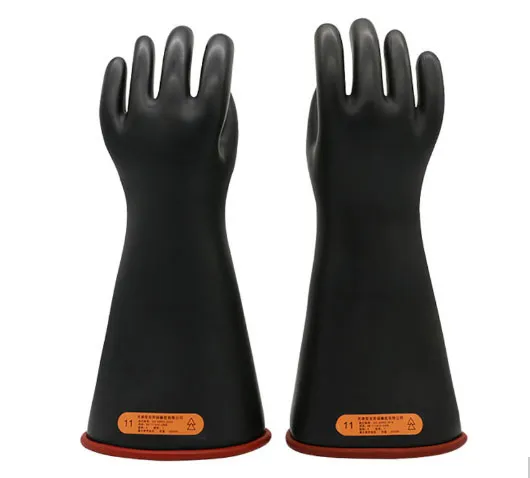

Not All Latex Gloves Are Created Equal
Here’s the most important thing to remember: not every latex glove is electrically insulated—at least not in a way you can trust for real electrical work.
Think about it. Disposable latex gloves, like the ones you see in hospitals or cleaning supply closets, are made for hygiene and splash protection—not for stopping high voltage. These gloves are thin, easily torn, and have no tested voltage rating. If you try to handle live wires wearing standard household latex gloves, you’re taking a huge risk.
By contrast, professional electrical insulating latex gloves—like JINPOWER’s Class 00 to Class 4 gloves—are:
- Made with high-purity natural latex, thicker and stronger than disposable gloves.
- Rigorously tested for proof voltage, dielectric strength, and leakage current.
- Clearly marked with their class rating, voltage limits, and test dates for easy traceability.
So when someone asks “Are latex gloves insulated?”, the honest answer is:
Yes—if they’re purpose-built, certified, and tested for electrical insulation.
Otherwise? Don’t bet your safety on it.
Next, I’ll show you exactly how these gloves are classified—so you can choose the right protection for your voltage level.
Classes of Electrical Insulating Latex Gloves
So, if you’re ready to use latex gloves for electrical insulation, you need to know which class matches your job.
Electrical insulating gloves are divided into six classes (00 to 4), each tested and rated for different working voltages.
Here’s how they break down:
| Class | Max Working Voltage (AC) | Proof Voltage (AC) | Dielectric Strength (AC) |
|---|---|---|---|
| Class 00 | 500V | 2.5 KV | 5 KV |
| Class 0 | 1,000V | 5 KV | 10 KV |
| Class 1 | 7,500V | 10 KV | 20 KV |
| Class 2 | 17,000V | 20 KV | 30 KV |
| Class 3 | 26,500V | 30 KV | 40 KV |
| Class 4 | 36,000V | 40 KV | 50 KV |
Each glove must also pass leakage current tests to ensure electricity stays where it belongs—away from your hands.
How do you choose the right class?
- For low-voltage panel work, Class 00 or 0 is often enough.
- For substations, transmission lines, or high-voltage troubleshooting, you’ll need Class 2–4, depending on the system voltage.
And don’t forget: the higher the class, the thicker the glove, so choosing the right balance between flexibility and protection matters.
Next, I’ll show you how to pick the right gloves—and what else you need to use them safely.
How to Choose the Right Latex Insulated Gloves
Picking the right latex insulated gloves isn’t just about grabbing the highest class on the shelf. Here’s what you need to look for to stay safe and compliant:
1. Match the Voltage
Always choose gloves with a class rating that covers your system’s maximum voltage, plus a safety margin. Never downgrade just because a job “looks simple.”
2. Check for Certification
Each glove should be marked with its class, test date, and batch number for traceability.
3. Pick the Right Size and Length
Most professional latex electrical gloves come in sizes 8–11 and lengths like 11″ or 14″. Proper fit means better dexterity and less hand fatigue—critical when handling tools or fine wiring.
4. Use Leather Protectors
Never use insulating gloves alone. Leather protectors prevent cuts, punctures, or abrasion damage that could compromise the glove’s dielectric strength.
5. Inspect and Test Regularly
Even certified gloves degrade over time. Do a daily visual and air test before each use, and follow regulations for periodic dielectric testing.
6. Store Them Right
Keep gloves clean, dry, and away from sunlight or chemicals. Use dedicated glove bags—don’t throw them in the toolbox!
Pro tip: If you’re not sure which class or configuration fits your job, work with a trusted supplier who can advise you and supply test reports.
The right latex glove, used the right way, is real electrical insurance.
JINPOWER’s Certified Latex Electrical Gloves
At JINPOWER, we don’t just say our latex gloves are insulated—we prove it.
Every pair of our natural latex electrical insulating gloves is engineered, tested, and certified to deliver high dielectric strength, withstanding voltages up to 36kV AC, ensuring reliable protection for live-line and high-voltage applications.
What sets our gloves apart?
High-Grade Natural Latex
We use high-purity latex formulated for excellent dielectric strength and flexibility—giving you both protection and dexterity on the job.
Full Voltage Classes
From Class 00 (500V) up to Class 4 (36,000V working voltage), our range covers everything from low-voltage maintenance to high-voltage transmission work.
Consistent Testing & Certification
Each glove batch goes through proof voltage tests, dielectric strength checks, and leakage current verification. You get clear labels, batch numbers, and testing dates for compliance.
Practical Options for Real-World Work
We offer sizes 8–11, lengths 11″ and 14″, plus matching leather protectors and storage bags to complete your PPE kit.
OEM & Bulk Supply
Need large volumes or custom branding? We’ve supported contractors, utilities, and railway projects for over 10 years with stable lead times and reliable exports.
Whether you need a few pairs or a full kit for your crews, our certified latex gloves make sure you’re insulated—and your work stays compliant.
Conclusion – Yes, But Only If They’re Certified
So, are latex gloves electrically insulated? The short answer is:
Yes—if they’re made for electrical work and properly certified.
Ordinary latex gloves, like medical or cleaning gloves, offer zero guaranteed protection against live electrical hazards. But high-grade natural latex gloves, like our Class 00 to Class 4 insulating gloves, are engineered, tested, and marked to handle real working voltages safely.
If you’re working with live power, don’t risk your hands—or your life—on guesswork.
Know your voltage.
Choose the right class.
Get certified gloves with test reports and use them with proper leather protectors.
Ready to upgrade your team’s electrical safety gear?
Talk to JINPOWER for professional advice, trusted products, and certified latex insulating gloves that keep you protected and compliant—every single time.
