ESD Mat Material vs “Anti-Static” Material: What Buyers Confuse Most
“Anti-static” does not always mean the same thing as ESD-safe. This is one of the most common mistakes buyers make when choosing mats for electronics repair, assembly, soldering, QA testing, and ESD protected workstations.
An anti-static material may help reduce static buildup or static generation. But an ESD mat material should do more. It should provide controlled dissipative performance, a defined resistance range, a reliable path to ground, and stable surface behavior during daily work.
The problem is not the word “anti-static” itself. The problem is buying by the word instead of buying by resistance performance, grounding method, material type, application scenario, and verification support.
The Short Answer: “Anti-Static” Is Not Enough as a Buying Specification
An anti-static material may reduce static generation, but an ESD mat material should be suitable for controlled static dissipation and grounding.
For professional electronics work, buyers should not only ask:
Is this mat anti-static?
They should ask:
Can this mat work as a grounded ESD worksurface for my process?
A real ESD mat should normally provide:
- defined resistance data
- suitable static dissipative performance
- grounding compatibility
- stable surface performance
- proper material structure
- suitable durability for the work area
- cleaning and maintenance guidance
- test or verification support
If a mat only says “anti-static” but gives no resistance range, no grounding method, and no clear application data, it may not be enough for ESD-sensitive work.
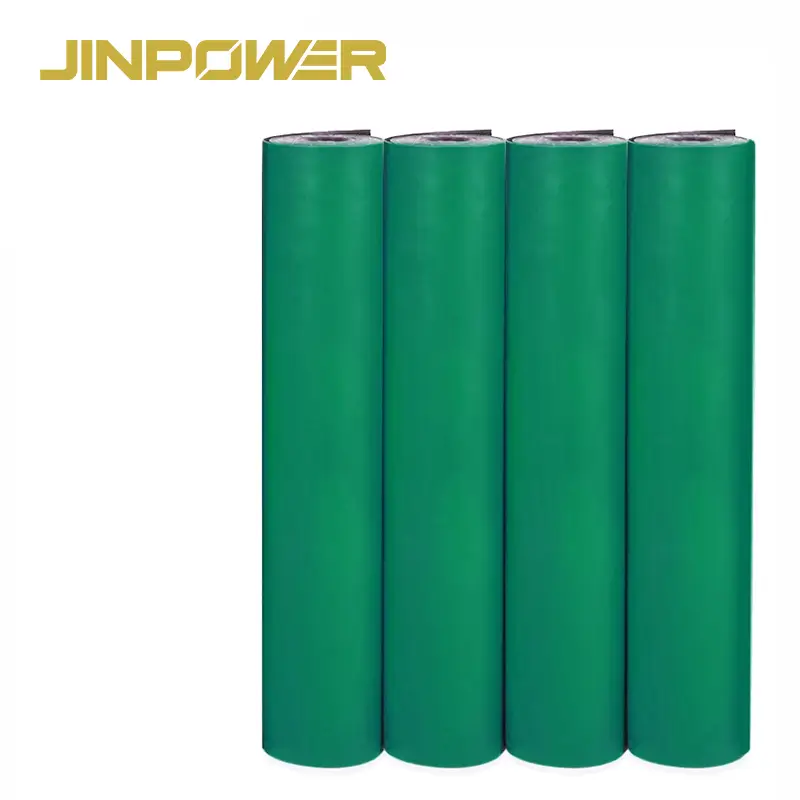
What “Anti-Static” Usually Means
Anti-static is a broad term. It is not always a complete technical specification.
In the market, “anti-static” may mean different things depending on the product type and supplier. It may mean the material:
- helps reduce static buildup
- generates less static during contact or movement
- has some surface treatment
- attracts less dust
- is used around electronics in a general way
- has a temporary anti-static coating
- is only suitable for low-risk static control
But “anti-static” does not automatically tell you:
- the resistance range
- whether the mat is conductive or dissipative
- whether the mat can be grounded
- whether it is suitable for ESD-sensitive devices
- whether it can pass ESD workstation verification
- whether it is suitable for repair, soldering, assembly, or QA use
This is why “anti-static” should not be the only buying standard.
What ESD Mat Material Should Do
ESD mat material should help create a controlled worksurface.
An ESD mat is not only a soft layer on the bench. It is part of an ESD workstation. Its job is to help control static charge where electronic parts, circuit boards, components, modules, tools, or devices are handled.
A suitable ESD mat material should:
- provide a controlled surface for ESD-sensitive items
- help static charge move in a controlled way
- connect to a proper grounding system
- work with a wrist strap and common point ground where required
- maintain performance after cleaning and normal use
- resist contamination, wear, and surface damage
- support testing and verification
A good ESD mat is not just “less static.” It should be part of a controlled system.
Conductive vs Static Dissipative vs Anti-Static vs Insulative
Buyers often confuse these four terms. They are not the same.
| Material Term | Simple Meaning | Buyer Risk |
|---|---|---|
| Conductive | Charge moves very quickly through the material | May discharge too fast for some ESD-sensitive work if not properly controlled |
| Static dissipative | Charge moves in a slower, controlled way | Often preferred for ESD worksurfaces |
| Anti-static | Reduces static buildup or static generation | Too broad; needs resistance data and grounding details |
| Insulative | Charge does not move easily | Can hold static charge and is usually not suitable as an ESD worksurface |
For many ESD workbenches, static dissipative material is preferred because it helps release static charge in a controlled way. A surface that is too conductive is not always better. Fast discharge can create its own risk for sensitive components.
The best buying question is:
Does this material control static safely and consistently for my workstation?
ESD Mat Material vs Generic Anti-Static Material
An ESD mat material should be selected for a defined ESD control function. A generic anti-static material may only reduce static in a general way.
| Item | ESD Mat Material | Generic Anti-Static Material |
|---|---|---|
| Main purpose | Controlled ESD worksurface or floor control | General static reduction |
| Resistance data | Should be clearly provided | May be missing or unclear |
| Grounding | Usually designed to connect to ground | May not have grounding hardware |
| Use with ESDS items | Suitable when correctly specified and verified | Not automatically suitable |
| Testing | Can be checked by ESD resistance testing | May not support formal verification |
| Common use | Electronics repair, assembly, QA, soldering, EPA areas | General static reduction, dust control, non-critical areas |
| Buyer risk | Wrong material type or wrong resistance range | Buying by label only without proof |
The word “anti-static” may be acceptable in casual descriptions, but it is not enough for professional ESD purchasing.
ESD Rubber Mat vs ESD Vinyl Mat vs Anti-Static Mat
Material choice should follow the work scenario.
| Material Type | Best Fit | What Buyers Should Check |
|---|---|---|
| ESD rubber mat | Repair, soldering, rework, frequent handling | Heat resistance, chemical resistance, RTG, durability |
| ESD vinyl mat | Light assembly, testing, general bench use | Cut size, resistance data, grounding method |
| Conductive mat | Special fast-drain applications | Process suitability and personnel safety |
| Generic anti-static mat | Low-risk static reduction or non-critical use | Whether it has real ESD resistance data |
| Silicone soldering mat | Heat work and tool organization | Do not assume ESD-safe unless specified and tested |
Rubber and vinyl are both common ESD mat materials, but they fit different conditions.
ESD rubber mats are often selected for repair benches, soldering areas, and workstations with more tool contact, flux exposure, and repeated handling.
ESD vinyl mats are often selected for light-duty assembly, testing areas, and workstations where easy cutting and cost control matter.
A generic anti-static mat may be acceptable for low-risk static reduction, but it should not be assumed to be a real ESD worksurface.
What Buyers Confuse Most
Mistake 1: Thinking “anti-static” means ESD-safe
This is the biggest misunderstanding.
A product labeled “anti-static” may reduce static generation, but it may not provide the correct resistance range or grounding path for ESD-sensitive electronics.
For electronics repair, assembly, or QA work, buyers should ask for resistance data and grounding details.
Mistake 2: Thinking conductive is always better
Conductive does not always mean safer. A very conductive surface may allow static charge to move too quickly. For many ESD worksurfaces, controlled dissipation is more important than fast discharge.
The goal is not to remove charge as fast as possible. The goal is to control charge safely.
Mistake 3: Ignoring resistance-to-ground
A mat surface may have ESD material properties, but if it has no reliable path to ground, the workstation may not work as intended.
Buyers should confirm:
- resistance-to-ground range
- ground snap
- ground cord compatibility
- common point ground connection
- testing method
Mistake 4: Buying by color
Green, blue, black, or gray does not prove ESD performance.
Some ESD mats are green or blue. Some are black. But color is only a visual choice. It is not a technical guarantee.
A buyer should never choose ESD mat material by color alone.
Mistake 5: Confusing a soldering mat with an ESD mat
A silicone soldering mat may resist heat, but heat resistance does not prove ESD safety.
If the mat is used for PCB repair, IC handling, or electronic assembly, buyers should confirm that it has ESD resistance data and grounding capability.
Mistake 6: Ignoring cleaning and aging
Even good ESD mat material can fail over time.
Common causes include:
- dust
- flux residue
- oil
- skin residue
- wrong cleaners
- silicone polish
- surface wear
- cuts and burns
- material aging
- loose ground snap
- broken ground cord
An ESD mat should be cleaned and tested as part of workstation maintenance.
Mistake 7: Using floor mat logic for table mat selection
ESD floor mats and ESD table mats are not selected in exactly the same way.
A table mat controls the worksurface where components are handled. A floor mat often works with footwear to control personnel grounding. The test method and use logic may be different.
Buyers should confirm whether the mat is designed for:
- workbench use
- floor use
- anti-fatigue standing use
- soldering use
- cleanroom use
- repair use
- production line use
How to Check If a Mat Is Really Suitable for ESD Work
A real ESD mat should be supported by data, not only by marketing words.
Before buying, check these questions:
- Does the supplier provide resistance data?
- Is the material conductive or static dissipative?
- What is the resistance-to-ground range?
- Can the mat be grounded?
- Does it include a snap or grounding point?
- Is a ground cord available?
- Is it designed for table use or floor use?
- Is it suitable for soldering, repair, assembly, or QA?
- Can it be cleaned without damaging performance?
- Can it be tested after installation?
- Does the supplier provide documentation or test support?
If the supplier cannot answer these questions, the mat may not be suitable for professional ESD control.
When Generic Anti-Static Material May Be Enough
Generic anti-static material is not useless. It just has limits.
It may be enough for:
- general dust reduction
- non-critical static control
- packaging support in low-risk areas
- temporary non-sensitive handling
- comfort mats not used for ESDS handling
- work areas outside an ESD protected area
But if ESD-sensitive components are handled directly on the surface, buyers should choose a proper ESD worksurface mat, not only a generic anti-static material.
A simple rule:
Low-risk static reduction may use anti-static material. Direct ESDS handling should use verified ESD mat material.
Why Grounding Still Matters
ESD mat material should work with the grounding system.
Even if the mat material is static dissipative, the workstation still needs a controlled path to ground. A mat without grounding may not provide complete ESD control.
A proper ESD workstation may include:
- ESD table mat
- ground cord
- common point ground
- wrist strap
- ESD-safe tools
- controlled packaging
- cleaning and testing routine
The mat is only one part of the system. It should not be treated as a stand-alone solution.
Why Testing Matters
Testing confirms whether the mat still performs as expected.
A mat can look clean and still fail. It can also look old but still pass testing. Visual inspection is useful, but resistance testing gives better confirmation.
Buyers and users should test:
- point-to-point resistance
- resistance to ground
- ground cord connection
- ground snap condition
- surface condition
- workstation grounding path
Testing is especially important after:
- installation
- cutting a roll to size
- moving the mat
- changing the ground cord
- heavy cleaning
- contamination
- visible surface wear
- repair or soldering exposure
How to Choose the Right ESD Mat Material
Choose the material by the job, not only by the product name.
For electronics repair:
Choose a durable ESD rubber mat if the workstation involves PCB repair, soldering, rework, hand tools, and repeated cleaning.
For light assembly:
ESD vinyl mat can be a practical option when the work is lighter and the mat is mainly used as a controlled worksurface.
For soldering:
Check both ESD performance and heat resistance. Do not assume any heat-resistant mat is ESD-safe.
For QA testing:
Choose a stable dissipative surface that can be tested and maintained.
For long benches:
Use ESD mat roll material that can be cut to the correct size and grounded properly.
For floor areas:
Use ESD floor mats that match the footwear/flooring system and can be verified by the ESD control program.
Buyer Checklist Before Ordering
Before ordering ESD mat material, confirm:
- application area
- table mat or floor mat
- material type
- resistance range
- grounding method
- ground snap requirement
- ground cord availability
- thickness
- roll size or cut size
- heat resistance
- chemical resistance
- cleaning method
- documentation
- testing method
- replacement support
A serious buyer should not only ask for “anti-static mat price.”
A better request is:
We need ESD mat material for electronics repair workstations. Please provide material type, resistance range, grounding method, thickness, size, cleaning guidance, and test data.
This gives the supplier enough information to recommend the correct mat.
Final Rule of Thumb
Do not buy ESD mat material by the word “anti-static.” Buy it by resistance range, grounding method, material durability, application scenario, and verification support.
Use this simple decision rule:
Anti-static label = not enough.
Resistance data + grounding method + correct material + suitable application = better ESD mat choice.
For professional electronics repair, assembly, soldering, and QA testing, buyers should choose verified ESD mat material, not only generic anti-static material.
FAQ
Is anti-static material the same as ESD material?
Not always. Anti-static material may reduce static buildup, but ESD material should provide controlled resistance performance and support grounding as part of an ESD control system.
Is every anti-static mat safe for electronics repair?
No. A mat labeled anti-static may not be suitable for PCB repair, IC handling, or ESD-sensitive electronics unless it has proper resistance data and grounding capability.
What resistance should an ESD mat material have?
Many ESD worksurfaces are selected within a static dissipative range and should meet the site ESD control requirement. Buyers should confirm the required resistance range with their ESD program or customer specification.
Is conductive material better than static dissipative material?
Not always. Conductive material allows charge to move very quickly. For many ESD worksurfaces, static dissipative material is preferred because it helps control discharge more gradually.
Is rubber better than vinyl for ESD mats?
It depends on the application. ESD rubber mats are often better for repair, soldering, rework, and heavy use. ESD vinyl mats may be suitable for light assembly, testing, and general bench use.
Can a silicone soldering mat replace an ESD mat?
Not automatically. A silicone soldering mat may be heat-resistant, but it is not ESD-safe unless it has proper ESD resistance data and grounding capability.
How do buyers know if a mat is really ESD-safe?
Buyers should check resistance data, grounding method, material type, intended application, test support, cleaning guidance, and supplier documentation.
Does an ESD mat need to be grounded?
Yes, if it is used as part of an ESD control workstation. The mat should have a controlled path to ground through the proper ground cord and site grounding system.