
Induced Voltage on Parallel Lines: Why a Portable Earthing Kit Matters
A line can be de-energized and still dangerous. When a de-energized conductor runs parallel to an energized line, voltage and current can be induced onto the supposedly dead line through electric-field and magnetic-field coupling. OSHA treats this as a real worker-protection issue, not a theoretical one, and requires employers to determine the approximate induced voltage on new lines installed parallel to energized lines or else proceed on the assumption that the induced voltage is hazardous.
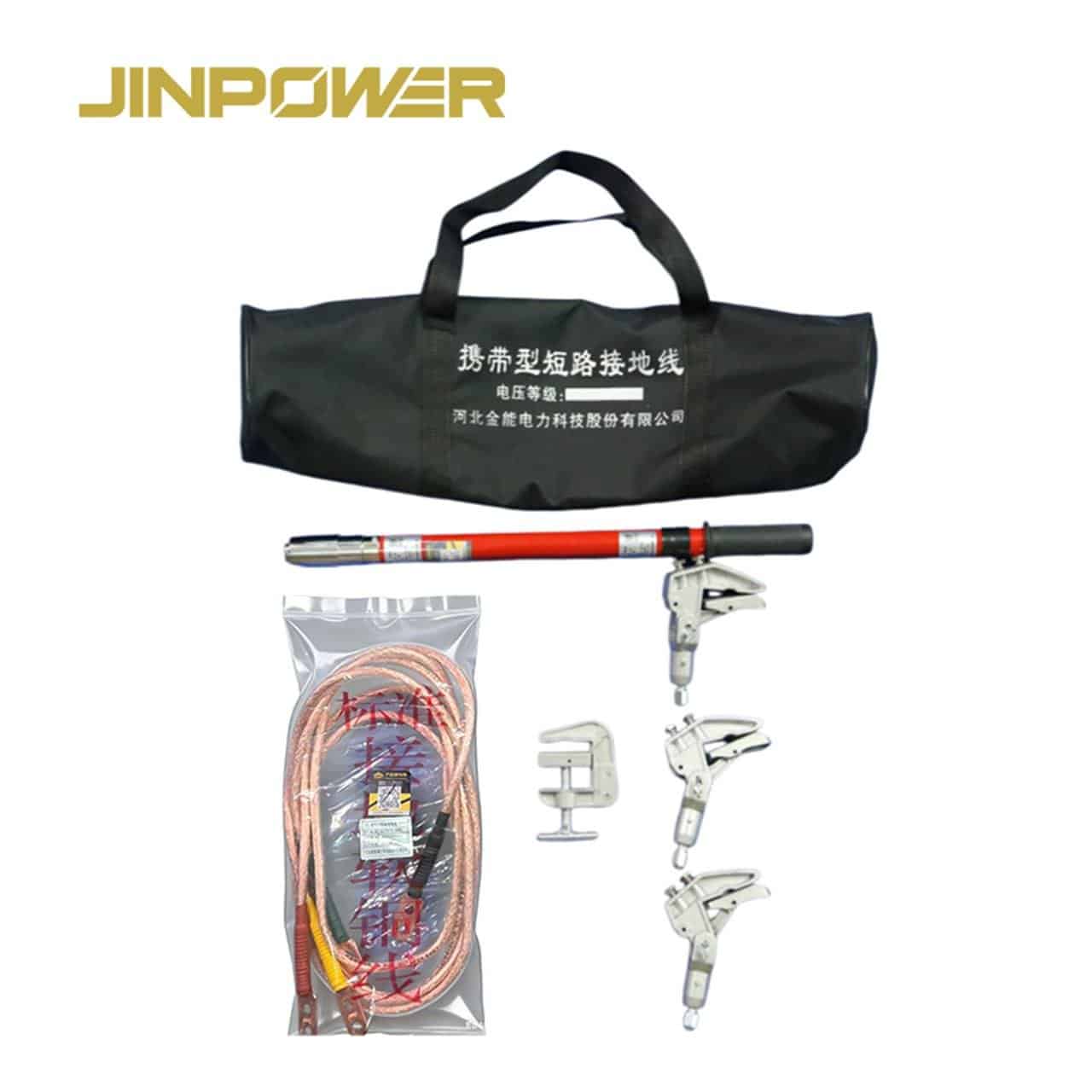
That is why a portable earthing kit still matters in HV maintenance. OSHA says protective grounds can discharge induced voltage from nearby energized lines, can discharge unexpected backfeed, and can help protective devices trip if a normal feed is inadvertently closed. IEC 61230 is built around the same reality: it applies to portable equipment for temporary earthing or earthing and short-circuiting of electrically isolated or de-energized AC and DC installations and networks.
The short answer
Parallel energized lines can still impose dangerous voltage on a de-energized conductor, so isolation alone does not remove all electrical risk. In that situation, a portable earthing kit is not just an accessory. It is part of the protection logic because it helps control induced voltage and supports safer fault-clearing behavior if the line is inadvertently re-energized.
How induced voltage appears on parallel lines
Induced voltage appears because nearby energized conductors can couple electrical influence into a de-energized parallel line. A technical paper on parallel transmission lines explains that whenever a de-energized transmission line is parallel to one or more energized transmission lines, voltages and currents are induced on the de-energized line. OSHA’s parallel-line rule is consistent with that engineering view because it requires employers to assess induced voltage before employees install lines parallel to energized ones.
This is why “open and isolated” is not the same as “zero potential.” The normal source may be removed, but the physical arrangement of the line can still allow induced voltage to appear from adjacent energized circuits. In HV environments, that risk grows more important because line length, route sharing, and proximity to energized assets are often greater than in simpler systems.
Why de-energized still is not the same as safe
De-energized only describes the normal source condition. It does not prove that no dangerous voltage can reappear. OSHA’s grounding guidance says protective grounds can deal with induced voltage from nearby energized lines, unexpected backfeed, and inadvertent energization. That wording matters because it shows the hazard model extends beyond the normal feed path.
In practical terms, three questions remain after isolation:
- Can a nearby energized line induce voltage?
- Can another source backfeed the line?
- Can the line be energized again unintentionally?
OSHA’s answer to all three is effectively yes, which is why protective grounding remains part of employee protection on de-energized lines and equipment.
Why testing for absence of voltage is not the whole story
Absence-of-voltage testing is essential, but it does not eliminate every residual or reappearing hazard by itself. OSHA’s electrical safety rules require verification of the de-energized condition before work begins, but the agency also separately requires employers in parallel-line situations to evaluate induced voltage and to use grounding for employee protection where hazards remain. That separation is important: verification tells you the present condition, while grounding helps control residual or later-appearing danger.
This is the correct mental model for the topic:
- Isolation removes the normal source.
- Testing verifies the present condition.
- Portable earthing helps control induced, backfed, or reappearing hazardous voltage.
That is also why IEC 61230 is relevant even after a system is isolated or de-energized.
Why a portable earthing kit matters
A portable earthing kit adds a protection layer that isolation and testing do not provide on their own. OSHA identifies three especially relevant effects: grounds can discharge induced voltage, grounds can discharge unexpected backfeed, and grounds can help cause protective devices to operate promptly if the normal feed is inadvertently closed.
A second reason it matters is worker protection at the worksite itself. OSHA’s Appendix C on protection from hazardous differences in potential explains that employers can use grounding and bonding to equalize voltage within the work area and reduce dangerous potential differences. For de-energized and grounded power-line work, that equipotential logic is part of how worker protection is achieved.
That makes the portable earthing kit important for two reasons at once:
- it helps control the electrical condition of the line
- it helps create a safer work area for the person touching or approaching it
This is a stronger and more useful explanation than saying the kit is there only “because procedure says so.”
Why this matters especially in HV maintenance
HV maintenance makes parallel-line induction harder to ignore. OSHA’s 1910.269 rule covers electric power generation, control, transformation, transmission, and distribution lines and equipment. Those are exactly the environments where long shared routes, adjacent energized circuits, field maintenance, and outage work make induced-voltage risk operationally important rather than academic.
IEC 61230 points the same way from the equipment side. It covers portable temporary earthing or earthing-and-short-circuiting equipment for electrically isolated or de-energized installations and networks, whether overhead or underground and whether low or high voltage. That scope fits parallel-line HV maintenance directly.
Why a portable earthing kit matters on parallel lines
The kit matters because it changes the risk picture after isolation. The table below summarizes the logic behind that statement. It is based on OSHA’s parallel-line induced-voltage rule, OSHA’s grounding-for-employee-protection guidance, and the engineering explanation of induced voltages on de-energized parallel lines.
| Residual hazard | How it appears on a de-energized line | Why isolation alone is not enough | Why a portable earthing kit still matters |
|---|---|---|---|
| Induced voltage | Coupling from nearby energized parallel lines | The normal source is open, but adjacent energized lines still influence the conductor | Helps discharge induced voltage and reduce hazardous potential |
| Unexpected backfeed | Voltage enters from another source path | Isolation of one source does not remove every source | Helps discharge backfeed and supports protective-device operation |
| Accidental re-energization | Normal feed or another source is reclosed unexpectedly | A previously safe condition can change suddenly | Helps create fault current that can trip protective devices |
| Hazardous potential difference at the worksite | Different conductive objects can sit at different potentials | A de-energized line is not automatically equipotential with the work area | Helps support safer equipotential conditions in the work zone |
Isolation, verification, and earthing do different jobs
These controls are related, but they are not interchangeable. Treating them as if they do the same thing is one of the biggest mistakes in de-energized line work.
| Control layer | Main purpose | What it does not solve by itself |
|---|---|---|
| Isolation | Removes the normal source path | Does not eliminate induction, backfeed, or every re-energization risk |
| Verification | Confirms the present electrical condition | Does not control future or reappearing hazardous voltage |
| Portable earthing | Helps control induced/reappearing voltage and improve worker protection | Does not replace correct isolation or correct verification |
This is the cleanest framework for the article because it explains why the kit matters without turning the page into an operating procedure.
When the portable earthing question becomes more important
The portable earthing question becomes more important as exposure to induced voltage becomes more credible. In project and maintenance planning, that usually means the site team should pay closer attention when there is a long parallel route, close proximity to energized lines, or outage work on conductors that remain near active infrastructure. OSHA’s rule on lines installed parallel to energized lines directly reflects this risk logic.
A practical decision view is:
| Site condition | Why induced-voltage risk rises | Why the portable earthing question becomes more important |
|---|---|---|
| Long parallel route | More exposure to coupling from energized lines | Residual voltage risk is harder to dismiss |
| Close spacing to energized circuit | Stronger electrical influence from adjacent line | Worker protection logic becomes more dependent on grounding |
| Outage work on overhead line | The line is de-energized but still physically exposed to nearby energized assets | Isolation alone is less persuasive as the final control |
| Transmission/distribution field maintenance | Complex energization paths and wider system exposure | Temporary earthing fits the hazard profile more directly |
| Substation or corridor work near energized assets | Nearby energized equipment can still shape the electrical environment | The case for grounded worker protection becomes stronger |
This table is not an installation guide. It is a planning and risk-clarification tool.
What buyers and safety teams should conclude
If parallel-line induction is a credible site hazard, a portable earthing kit should be treated as part of the protective strategy, not as an optional add-on. OSHA’s language is strong enough to support that conclusion, and IEC 61230 gives the portable-equipment framework for exactly this kind of de-energized-but-still-risky environment.
That is also why this topic has real purchasing value. It moves the discussion from “Do we need a kit?” to:
- what kind of hazard remains after isolation
- why temporary earthing is still relevant
- and whether the project has thought about induced-voltage protection seriously enough before work begins
Final takeaway
On parallel lines, “de-energized” is not the same as “electrically safe.” Nearby energized circuits can still induce dangerous voltage, and that is why a portable earthing kit matters. It helps control induced voltage, helps manage backfeed and re-energization consequences, and supports a safer work area for the people who still have to touch the line. Follow local regulations and your site safety procedure.
FAQ
Why do de-energized parallel lines still carry voltage?
Because nearby energized lines can induce voltage and current onto a de-energized parallel conductor through electric-field and magnetic-field coupling.
Does isolation alone remove induced-voltage risk?
No. OSHA requires employers to determine the approximate voltage induced on lines installed parallel to energized lines, or else assume that the induced voltage is hazardous.
What does a portable earthing kit do in this situation?
OSHA says grounds can discharge induced voltage from nearby energized lines, discharge unexpected backfeed, and help protective devices trip if the line is inadvertently energized.
Is de-energized the same as safe to touch?
Not automatically. De-energized removes the normal source, but it does not by itself eliminate induced voltage, backfeed, or accidental re-energization risk.
Why is IEC 61230 relevant here?
Because IEC 61230 applies to portable equipment for temporary earthing or earthing and short-circuiting of electrically isolated or de-energized AC and DC installations and networks.
