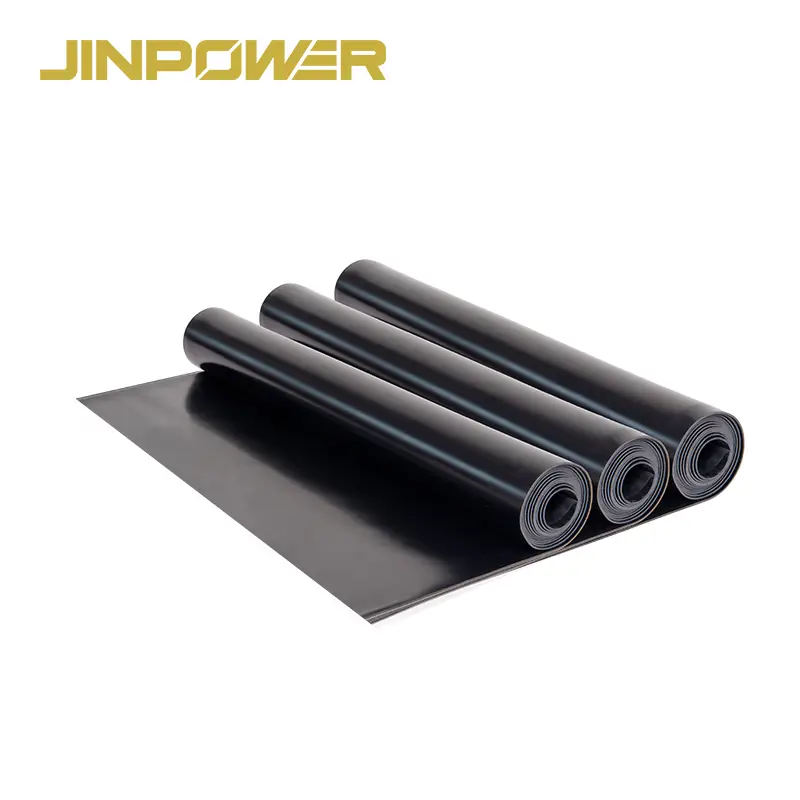
Why Insulating Mats Matter in 33 kV and 50 kV Environments


In medium- and high-voltage installations, electrical insulating mats can provide supplementary insulation beneath workers’ feet at designated operating positions. However, selecting a mat for a 33 kV or 50 kV environment requires more than matching a product label to the nominal system voltage.
The applicable standard, AC or DC application, product classification, verified test documentation, installation conditions, and site safety procedures all matter. A mat that is suitable for one application must not automatically be assumed suitable for another, even when the voltage figures appear similar.
For utilities, EPC contractors, electrical maintenance teams, and industrial procurement departments, understanding these distinctions helps prevent specification errors and supports more reliable purchasing decisions.
This guide explains how electrical insulating mats fit into high-voltage safety planning, what IEC 61111:2026 covers, why 33 kV and 50 kV applications require different assessments, and what buyers should verify before specifying switchboard matting.
Why Electrical Insulating Mats Matter Around High-Voltage Equipment
Switchgear rooms, substations, control rooms, and electrical maintenance areas may contain equipment operating at hazardous voltages. During approved operating, inspection, and maintenance activities, workers may need to stand near electrical panels or other equipment where electrical exposure must be carefully controlled.
A properly selected and maintained insulating mat can provide a supplementary insulating layer between the worker’s feet and the supporting floor.
Its suitability depends on the mat’s electrical classification, physical condition, installation, environmental exposure, and the requirements of the specific work activity.
Providing Supplementary Insulation at Operating Positions
Electrical insulating mats are commonly considered for designated standing positions in front of switchgear, distribution panels, control cabinets, and other electrical equipment.
Their purpose is to provide underfoot insulation when selected and used within their specified limits. They form one part of a broader electrical safety arrangement rather than an independent guarantee of protection.
The relevant assessment should consider:
The actual electrical exposure and applicable operating procedures.
The required insulating mat classification and supporting test documentation.
The condition of the floor and the mat’s contact with the supporting surface.
The presence of moisture, conductive contamination, oil, or chemical exposure.
Other protective measures required for the task.
A mat should never be used to justify working on energized equipment when the applicable safety procedures require isolation, de-energization, grounding, or other controls.
Understanding the Limits of Underfoot Insulation
An insulating mat is not a substitute for an engineered grounding system.
In substations and other high-voltage installations, hazardous step and touch potentials may arise from ground-potential differences during electrical faults. These hazards require an appropriate engineering assessment and protective measures.
A rubber insulating mat does not automatically create an equipotential zone, eliminate ground-potential rise, or make every position around a faulted installation safe.
For background on ground-potential hazards and protective measures, see the OSHA guidance on protection from hazardous differences in electric potential.
The distinction is important: insulating equipment and engineered grounding or equipotential-bonding systems perform different functions. Their selection must follow the actual hazard assessment and applicable work procedures.
What IEC 61111:2026 Means for Insulating Mat Selection
IEC 61111 is an important reference for electrical insulating matting used to protect workers standing on the covered surface.
The latest edition, IEC 61111:2026 — Live working: Electrical insulating matting, was published on September 4, 2026.
The IEC states that the standard applies to flexible electrical insulating matting for worker protection on electrical installations up to:
36,000 V AC for AC use.
36,000 V AC and 54,000 V DC for AC/DC use.
These stated limits must be interpreted in the context of the applicable product classification, test requirements, and intended use. They are not a universal approval for every mat marketed for high-voltage applications.
Why the AC and DC Ratings Must Be Distinguished
AC and DC ratings are not interchangeable.
A mat’s DC rating cannot be used to establish its suitability for an AC installation at the same nominal voltage. Buyers must confirm the applicable classification and the specific product documentation.
The distinction is particularly important when comparing 33 kV and 50 kV installations.
| Application | Relationship to IEC 61111:2026 scope | What buyers should verify |
|---|---|---|
| 33 kV AC | Within the stated 36 kV AC scope | The selected mat’s classification, test evidence, installation conditions, and project requirements |
| 50 kV AC | Above the stated 36 kV AC scope | A suitable, documented solution supported by the applicable standards, engineering assessment, and project approval |
| 50 kV DC | Within the stated 54 kV DC scope for AC/DC use, subject to the applicable classification | Confirmation that the specific mat is classified and documented for the intended DC application |
Important: The fact that 33 kV AC falls within the standard’s stated scope does not automatically establish that every Class 4 mat is suitable for every 33 kV installation.
Likewise, the 54 kV DC figure must not be interpreted as a 50 kV AC rating.
The applicable standard edition should also be confirmed against local regulations, contractual requirements, and the project’s approved technical specification.
Can an Insulating Mat Be Used in a 33 kV Environment?
A 33 kV AC installation falls within the voltage scope stated for AC use under IEC 61111:2026. This makes the standard relevant to the selection process, but the voltage figure alone is not enough to approve a particular product.
Before specifying a mat for a 33 kV switchgear room or substation operating position, confirm the following.
1. Verify the Product Classification
Check the manufacturer’s marking and technical documentation. Confirm the declared class, applicable standard edition, intended application, and relevant electrical test evidence.
Do not rely solely on a sales description such as “high-voltage rubber mat” or “36 kV insulating mat.”
2. Review the Actual Operating Conditions
The mat must be suitable for the intended installation and work activity. Consider the floor condition, moisture, contamination, mechanical wear, and other environmental factors that may affect use.
If the site has additional requirements beyond the standard’s scope, those requirements must also be addressed.
3. Confirm Project Acceptance Requirements
Utilities and EPC contractors may specify particular standards, test reports, markings, inspection records, and documentation formats.
A product should be approved against the actual project specification rather than accepted solely because its advertised voltage figure appears adequate.
For buyers, the practical approach is to establish the required classification first, then verify the exact model and supporting documentation.
What About Insulating Mats for 50 kV AC Systems?
A 50 kV AC application requires a different assessment.
Because 50 kV AC exceeds the 36 kV AC scope stated in IEC 61111:2026, a buyer should not assume that a mat classified under this standard is automatically suitable for the application.
In particular, the standard’s 54 kV DC figure does not authorize a 50 kV AC application.
Why a Higher Thickness Is Not Enough
Increasing the thickness of a rubber mat does not, by itself, establish compliance with an electrical safety standard or prove suitability for a particular voltage.
Electrical performance depends on the material, manufacturing process, product construction, test requirements, and the evidence supporting the intended application.
A thicker mat without the appropriate technical evidence is not a substitute for a verified product specification.
What Should Project Engineers Do?
For a 50 kV AC installation, the project team should:
Confirm the actual system conditions and electrical exposure.
Identify the applicable national or industry requirements and the owner’s technical specification.
Determine what form of insulating protection is appropriate for the work activity.
Obtain product-specific evidence supporting the proposed solution.
Obtain approval from the responsible electrical safety or engineering authority before procurement and use.
If a supplier proposes a mat for this application, request the exact model identification, applicable standard or technical basis, supporting test documentation, and the limits of the claimed application.
Do not accept a general statement that a product is suitable for “up to 50 kV” without checking what that rating means, whether it refers to AC or DC, and which requirements support it.
What Factors Matter Beyond Voltage Classification?
Electrical classification is essential, but it is not the only purchasing consideration.
Surface Pattern and Slip Resistance
Insulating mats are available in different surface profiles, including ribbed, studded, and diamond-pattern designs.
The appropriate surface depends on the operating environment, cleaning requirements, footwear, and expected floor conditions.
A textured surface may help provide traction, but the appearance of a pattern does not establish a particular slip-resistance rating. Buyers should request relevant performance data when slip resistance is a project requirement.
Thickness, Width, and Length
Thickness and dimensions should be specified according to the selected product, applicable standard, installation requirements, and project documentation.
Do not assume that one thickness is appropriate for every voltage class or that a wider mat automatically provides better electrical protection.
The mat should fit the designated operating position without introducing unacceptable trip hazards, unstable edges, or interference with equipment access.
Environmental Compatibility
Substation and industrial environments may expose mats to dust, moisture, oil, cleaning chemicals, temperature variation, or outdoor weather conditions.
The buyer should identify the actual exposure and request evidence for any required material resistance.
For example, a claim of oil resistance or UV resistance should be supported by applicable product data. It should not be inferred simply because the product is made of rubber.
Installation and Condition
A correctly specified mat may still be unsuitable for continued use if it becomes damaged or is installed incorrectly.
Before use, check that the mat:
Is placed on a suitable supporting surface.
Is free from visible cuts, cracks, and other unacceptable damage.
Does not have loose or curled edges that create a trip hazard.
Has not been modified in a way that invalidates its identification or intended use.
Remains within the manufacturer’s inspection and maintenance requirements.
Inspection frequency and retirement criteria should follow the applicable standard, manufacturer instructions, and site safety procedures.
Where Are Electrical Insulating Mats Commonly Used?
The installation location influences the required product configuration, environmental properties, and documentation.
Switchgear Rooms and Distribution Panels
Mats may be specified at designated operator positions in front of switchgear, distribution panels, and control cabinets.
The procurement specification should identify the required electrical classification, mat dimensions, surface profile, and relevant documentation.
Substations and Electrical Control Rooms
Substation operating areas may have additional requirements relating to floor conditions, grounding arrangements, access routes, and the wider electrical safety design.
Insulating matting should be selected as part of that design, not as a replacement for engineered grounding or other required protective measures.
Industrial Electrical Maintenance Areas
Factories, power plants, and industrial facilities may use insulating mats around designated electrical operating and maintenance positions.
Where oil, moisture, chemicals, or heavy traffic are present, the material’s documented environmental suitability and physical condition should be reviewed.
For outdoor installations, additional attention should be given to weather exposure, storage, cleaning, and inspection.
How to Specify Electrical Insulating Mats in a Tender or RFQ
A well-prepared request for quotation (RFQ) helps the supplier identify an appropriate product and reduces the risk of receiving a mat that meets a general description but does not meet the project’s actual requirements.
The following checklist can be used by procurement teams, electrical contractors, and project engineers.
| RFQ item | Information to provide |
|---|---|
| Installation | Switchgear room, substation, control room, or other application |
| Electrical conditions | System voltage, AC or DC, and relevant exposure conditions |
| Required classification | Applicable standard, edition, and specified product class |
| Product dimensions | Required thickness, width, length, and quantity |
| Surface design | Ribbed, studded, diamond pattern, or another specified profile |
| Environmental conditions | Expected moisture, oil, chemicals, temperature, UV exposure, and traffic |
| Technical documentation | Product data sheet, relevant test reports, markings, and traceability information |
| Acceptance requirements | Inspection criteria, document format, and project approval requirements |
For a 33 kV AC project, the RFQ should identify the required IEC 61111 classification and request evidence for the selected model.
For a 50 kV AC project, the buyer should not simply specify “IEC 61111 Class 4” as proof of suitability. The project team must establish an appropriate technical basis and obtain supporting documentation for the proposed application.
This approach makes the procurement decision more transparent and helps prevent misunderstandings between the buyer, supplier, and project approval team.
Common Mistakes When Selecting High-Voltage Insulating Mats
Mistake 1: Choosing a Mat from the Voltage Number Alone
A voltage figure on a product page is not a complete technical specification.
Better approach: Verify the applicable classification, test evidence, and intended application.
Mistake 2: Treating AC and DC Ratings as Equivalent
The same numerical voltage does not establish equivalent suitability for AC and DC applications.
Better approach: Confirm the exact AC/DC classification and the manufacturer’s supporting documentation.
Mistake 3: Assuming a Thicker Mat Is Always Safer
Thickness alone does not prove compliance or suitability.
Better approach: Select a documented product that meets the applicable technical requirements.
Mistake 4: Assuming an Insulating Mat Controls Step Potential
An insulating mat does not automatically eliminate hazardous ground-potential differences.
Better approach: Ensure that step and touch potential hazards are addressed through appropriate engineering analysis and protective measures.
Mistake 5: Accepting Generic Rubber Matting as Electrical Insulating Matting
General-purpose rubber flooring, anti-fatigue mats, and ESD mats are not automatically suitable for electrical shock protection.
Better approach: Request the specific electrical classification and applicable test documentation for the product.
Mistake 6: Ignoring Installation and Maintenance
A damaged or incorrectly installed mat may no longer be suitable for its intended use.
Better approach: Establish inspection, maintenance, and replacement criteria before putting the mat into service.
Frequently Asked Questions
Can an IEC 61111 Class 4 mat be used in a 33 kV AC installation?
The stated 36 kV AC scope of IEC 61111:2026 includes 33 kV AC applications. However, suitability still depends on the selected product’s classification, technical documentation, installation conditions, and project requirements. The standard’s scope alone is not product-specific approval.
Can an IEC 61111 Class 4 mat be used in a 50 kV AC installation?
Not on the basis of the IEC 61111:2026 rating alone. The standard’s stated AC scope extends to 36 kV AC. A 50 kV AC project requires a separately established technical basis and an appropriately documented, approved solution.
Does a 54 kV DC rating mean that the mat can be used at 50 kV AC?
No. AC and DC ratings are not interchangeable. The applicable classification and supporting documentation must explicitly address the intended application.
Can insulating mats prevent step-potential accidents?
An insulating mat may provide supplementary underfoot insulation, but it does not automatically control hazardous ground-potential differences. Step and touch potential hazards require appropriate engineering assessment and protective measures.
How thick should an insulating mat be for a high-voltage installation?
There is no single thickness that can be recommended for every high-voltage application. The required specification must be established from the applicable standard, the selected product’s verified performance, and the project requirements.
What documents should buyers request?
Request the product data sheet, identification and classification details, applicable standard and edition, relevant test documentation, and any project-specific acceptance records. Environmental performance claims should also be supported where they are part of the purchasing specification.
Final Checklist: Select the Mat According to the Application
Electrical insulating mats can provide supplementary protection at designated operating positions when the product is correctly selected, installed, maintained, and used within its specified limits.
For 33 kV AC installations, IEC 61111:2026 provides a relevant reference framework, but the selected product and its documentation still require verification.
For 50 kV AC installations, buyers must not assume that an IEC 61111 Class 4 mat is suitable merely because the standard also states a 54 kV DC limit for AC/DC use. The application requires a separately established technical basis and appropriate approval.
Before placing an order, confirm the electrical conditions, applicable standard, product classification, dimensions, environmental requirements, and supporting documentation.
JINPOWER supplies electrical insulating mats and switchboard matting for industrial electrical applications. Buyers can review our Electrical Insulating Mats and Switchboard Matting product ranges to discuss available configurations, dimensions, and technical documentation.
Safety note: This article provides general product-selection and procurement guidance. It does not replace local regulations, site-specific electrical engineering, a formal hazard assessment, or an approved electrical safety procedure.